Friday, October 16, 2015

Elektra Triumphant: Goerke and BSO Light up Boston


(Photo borrowed from Boston Symphony Orchestra)


There was no set, neither were there costumes nor director, but make no mistake about it, the hottest night of opera on planet Earth last night took place in Boston, Massachusetts. I’d bet the farm on it.

The Boston Symphony presented a concert performance of Richard Strauss and Hugo von Hofmannsthal groundbreaking 1909 opera, “Elektra,” and, over a century after its premiere, shows it still can make an effect on an audience that is rare in any opera house. That this performance took place not in an opera house, but rather in Symphony Hall seemed almost to heighten that effect. While there was no platform for the singers to "act on" (and blessedly singing from memory) they "gave the play" on the limited space before Maestro Nelson's podium and his players, most with the skill of finely honed actors.


Strauss gave no mercy to his title character who is onstage for the entire evening, even during “breaks” from singing and in what may be considered by general operatic standards a rather short opera (under a pair of hours) he has gifted his heroine one of the most challenging, exhausting ... and ultimately rewarding roles in the dramatic soprano repertoire.

Last night Christine Goerke faced those challenges, met those challenges and blew the roof off not only the hall, but of every audience member’s head. It was THAT kind of night. From her entrance from the audience, until her collapse of death, it was impossible to keep one’s eyes off the girl in the crimson gown. Goerke’s naturally electrifying radiance that, when matched with a voice of such power and command of her language created an Elektra that was never just pitiable or terrifying (though she certainly brought those elements to the forefront) but formidable, yet feminine.

This unique take was established instantly during Elektra’s opening monologue, surely one of the greatest “entrance arias” in all of opera. During its roughly 10 minute length, the soprano never appeared to give less than everything she had, yet those accustomed to her performances feared not about what was left in the reserve tank for the rest of the evening. Indeed, at every climatic high note moment Goerke seemed to go for broke in a manner few Elektras are afforded or capable of.

As sister Chrysothemis, Gun-Brit Barkmin could hardly have been more effective and played in contrast to Goerke’s Elektra. The voice, deceptively slender, is nonetheless capable of making mighty sounds and was, even decible-wise, easily up to the challenges of holding her own against her formidable sister. The two ladies played beautifully off each other and, coming together after learning the (false) news of their brother’s death, were jointly heartbreaking. Similarly their joy at the murder of mother and stepdad was explosive, effusive as the Tanglewood Chorus, joined in Strauss’ merry mayhem, whilst pouring out and singing from the doors of the hall’s second balcony. Amazing.

Jane Henschel brought vocal glamor and rock solid musicianship as Klytemnestra. The long mother/daughter scene was, as it should be, the linchpin to the evening’s drama and while Henschel’s presence was more “stand here and sing” than the other characters, the scene was enormously effective, ending with her cackling laugh to destroy her daughter’s sense of having won the battle.

As Orest, James Rutherford exhibited some of his mother’s stoic quality, which made his sister’s final recognition of him infinitely touching. It’s not a slap in the face, but in the longest male role of the opera, Orest is almost a prop (I know some baritones who will hate me for that) for Elektra to sound off of. Indeed, Strauss, here, gives his heroine the most beautiful music she will have all evening (one can hear strongly the Vier letze lieder which would come 40 years later). Though “unstaged” Ms. Goerke again proved to be in complete sympathy with her character and after a passionate embrace, moves away, staring at the hand that touched her brother, the image of him almost fading away as if a dream, while he was still there. It added something immeasurable and in a way, the gesture became part of the music.

Gerhard Siegel’s Aegisthe had as much fun belittling those around him as Strauss allows, before being murdered and providing his stepdaughter with the greatest line of the night: “Agamemnon hört dich!” (“Agamemnon hears you!”)

In supporting roles, Elizabeth Byrne, Nadine Secunde, Meredith Hansen, Nadezhda Serdyuk, Claudia Huckle, Mary Philips, Sandra Lopez, Rebecca Nash, Mark Showalter, and Kevin Langon all contributed enormously to the success of the performance.

Andris Nelsons appeared, all night, to be dancing on the rarest of clouds. To be able to present this orchestra in this score and allowing Herr Strauss to “do his thing.” There were moments, rare as they were, where I wondered if he’d forgotten there was singers onstage having to compete with the sheer decibel strength the band was capable of putting out. He seemed to luxuriate in the knowledge that, at least with this present cast, he had to hold nothing back, and acted accordingly. The end result was the immediate explosion of sound from an audience who’d been held enraptured the past couple of hours. While standing ovations have become a norm for many performances these days, not many of them involve the entire audience and fewer still begin when the house collectively leaps to its feet while the final chord (and what a chord Strauss gives us) is still hanging in the air. The shouting and cheers went on for a good long while, few even daring to leave the hall.

There was nowhere better to be than Boston last night. Anyone who can possibly make the next performances (Boston on Saturday, Carnegie Hall-NYC next Wednesday) would be foolish not to go. Seriously.

p.

Labels: , , , , , , , , , ,

Monday, June 22, 2015

That Other Salome: 1923 Silent Classic


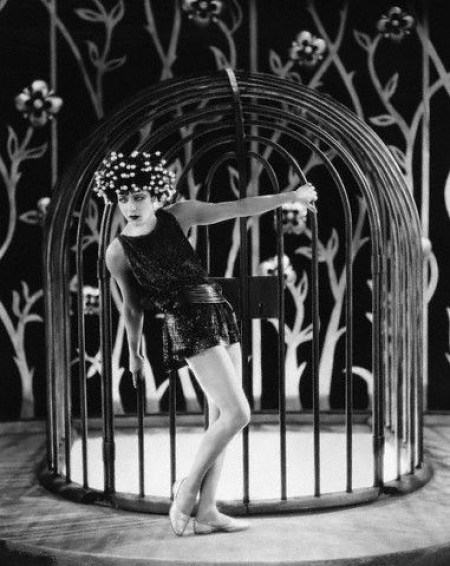
After what seemed like forever I finally got my hands on a copy of this now classic silent starring the then 44 year old Alla Nazimova. With amazing designs by Natacha Rambova (aka Mrs. Rudy Valentino) it is inspired by Beardsley's famous drawings. Yes, at times Nazimova at times looks her age, but then melts into a bizarre girlishness appropriate to the insanity of her charactedr.

In amazing physical shape, Nazimova often isn't wearing, sometimes bringing focus to her wig with that crown of bobbing lights. It is one of the coolest headdresses created for film. She is never subtle, but what would be the purpose of that in a silent film? What she is is electrifying, captivating even when standing still and striking one of her trademark poses, evoking, at times, Gloria Swanson in Sunset Boulevard (perhaps even inspiring Ms. Swanson?).


Earl Schenck is both beautiful and bizarre as Narraboth, in his harlequin painted tights, silver nipple discs and a necklace of beads as big as golf balls. He moves like a dancer.

Arthur Jasmine as The Page is about the feyest creature I've ever seen on screen and like everything else about this Salome, completely over the top.

No one, however, is more over-the-top than Rose Dione's termagant Herodias. Clawing, kicking Narraboth and her slaves, drunkenly flirting with a table guest hers is a frightening comical presence. She is not helped by her cave-woman hair and the most garishly painted tights in the film. Dione would later gain her "real" fame as the wonderful Madame Tetrallini in the film classic Freaks. There were moments where I thought "Cher as Morticia Addams."


Nigel De Brulier's Jokanaan seems to be modeled after Wilde himself. Nearly naked (as is much of the cast) he is positively sepulchral, his white, white skin almost glowing blue.


Interestingly there is a choice of soundtracks and I couldn't settle on one. Ultimately I ended up preferring the electronic score with "Invisible Orchestra" - a two man operation of keyboards and percussion, over the somewhat Strauss-lite, and flute heavy chamber orchestra accompaniment.


The famous dance is mesmerizing, Nazimova barely moving but riveting the attention. After the dance and execution, Nazimova's Salome is transformed by the most elaborate costume of the show, an eye-poopping gown worn beneath an enormous Turandot-like robe, completely with a stage filling train, her eyelids painted and topping everything off with a turban. Straight out of Beardsley, and a hell of a lot of fun.


Even more fun - and more visually impressive - was the bonus feature accompanying the film: Lot in Sodom. Lots of bared flesh, time-lapsed photography creating breathtakingly modern images for a film of its time.

Labels: , , , , , , , , , , , , ,

Sunday, August 31, 2014

Christine Goerke's Elektra from London: The "WOW!" Factor


I just finished listening to the live broadcast from London's Royal Albert Hall of Strauss' Elektra (my second favorite opera . . . ever) and certainly hope others got to experience this performance. It may be the single most amazing Elektra I've experienced outside of the concert hall or opera house. I didn't think she could have been better in the role than her Chicago opening night last season or her Covent Garden performances, but with more experience in the role, La Goerke really, truly sank her teeth into the meat - and the heart of Elektra.

The audience went (pardon the term) Bat-Shit-Crazy right after the final note and when the soprano came out things got even crazier. A similar roar went up for Dame Felicity Palmer. Then, when Goerke came back out the electricity went up even a notch or two higher . . . one might call it frenzied or fevered.

It's rare when your Elektra has better, lighter, yet solid high notes than her baby sister, and, as good as Gun-Brit Barkmin was as Chrysothemis, when the gals were doing their sister act, it was difficult not to notice who was more secure up there.

Johan Reuter was mighty good as Orest, and the interaction between he and Ms. Goerke led up to a Recognition Scene that was as sumptuous and gorgeous as one is likely to hear.

Maestro Bychkov shaped the score in perhaps one of the most exciting readings I've ever heard of it. The quieter moments have never sounded as intimate as he made them here. He mentioned in an earlier interview that Royal Albert Hall's acoustics - for as vast a space as it is - allows one to do things with a score one might not chance in other houses, something like "everything is possible here." He was right.

Additionally the way he handled the music following the murders was nothing short of breathtaking, the waltz beginning slow and deliberate, not the hurried madness we usually get (and love), then building and building to a positively dizzying effect that threw one (or at least me) completely off balance. It was tremendous and as overwhelming a performance overall that I have experienced of this my second favorite opera.

I think the announcer just said the broadcast will be available for 23 more days. This is happy news, indeed and one would be mad not to seize the opportunity to take advantage of this most generous gift.

Elektrifying!

Labels: , , , , , , , , , , , ,

Wednesday, December 16, 2009

Elektra at the Met: Susan Bullock's Triumphant Debut


Well, I was surprised to read much negative blogging about the Metropolitan Opera Company debut of soprano Susan Bullock in her most famous role: Richard Strauss’s Elektra. Despite these negative remarks (mostly from people who heard the Sirius broadcast – and admitted to not being in attendance) the house – including me – seemed to have a wicked good time. Bullock was formidable in the role, singing it with a loveliness of timbre rarely encountered in this voicebusting warhorse. I loved her dance at the beginning and was worried she wasn't going to dance at the end, but then she stalked awkwardly up the stairs grabbed the ax and began waltzing with it until she danced herself into a frenzy. One blog referred to her dancing as ridiculous and risible? Not to me ! It was (if you’ll pardon the pun) - Elektrifying! Witness the fact that she was brava-ed to pieces when the lights came back on for one of the best bows in opera (you have to look to the Minghella Butterfly for a better solo bow!) If one wasn’t moved by this performance, she's simply not your cup o' tea, but wow.

Many commented that Ms. Bullock simply "is not an Elektra for the Met" - a statement I simply don't understand. I was in standing room under the overhang and the voice filled the house - beautifully. It's a softer-grained voice than usually heard in the role, but it carried over the orchestra EASILY and I never once strained to hear a note from her. The highest notes seem to be a bit of a trial for her - more willed than sung - but I didn't mind that for a minute because the rest was so beautifully shaped. I couldn't stop crying during the Recognition Scene, which she shaped and phrased with exquisite control.

And what about Debbie Voigt? My jaw dropped - this is easily the BEST singing I've heard from her in . . . I'd bet five or six years. Big, gleaming, the top notes don't have the spin they once did, but they were formidably sung and HUGE. She and Bullock played nicely off each other.

Felicity Palmer was wonderful throughout – her voice rich with sound and she sang (rather than shoved her way) through the role in a manner I’ve not heard really since Christa Ludwig. Even so, the pacing in the middle of her long (long) monologue needed some help which conductor Fabio Luisi didn't provide, seeming to indulge the singer rather than taking the proverbial bull by the horns and moving it forward. Here was (for me at least) the only moment where the drama seemed to sag. By the way, if that Palmer screaming at the end (which I doubt): then Wow!

Maestro Luisi shocked me with the attention to detail he brought out - and which I did not expect at all (I like him generally, but would never have imagined him for Strauss - particularly THIS Strauss!) What a pleasant surprise and I'd like to hear him after he's figured out a couple of the pacing issues.

Though I preferred the previous “director” of stage action in the Met’s last go ‘round with this beast (Polaski, Mattila, Lipovsek and Held) I also rather loved the slight changes David Kneuss brought to the blockings (many of which were identical when this production was new and with Behrens - still MY favorite Elektra ever). The best change came in the staging of the Recognition Scene – the entirety of which was profoundly moving, acted well by both brother and sister, and gorgeously sung by Ms. Bullock.

The Serving Maids were (as they tend to be at the Met) sounded good, improving as the scene went on but with some real stand out singing from Jennifer Check and Maria Zifchak.

Wolfgang Schmidt should not be singing. Not even Aegisth. Wow, was he bad. Just awful, actually.

Evgeny Nikitin was also something of a major disappointment. Decent actor, but the sound is rather unlovely. I still liked what he did physically, and the falling down as his sister calls his name - followed by her falling to the ground felt exactly right.

Everyone around me had a ball, and it was WONDERFUL hearing Voigt sound this good again. I hope it continues going this way for her and not as it's been for too long now. The older couple to my left – long time Wagnerites and Met supporters were attending their first Elektra – said the Mrs.: “I’m coming back to see this one a few more times . . . it’s so short – and so wild!”

All in all a welcome debut for Ms. Bullock and I hope to see and hear a lot more of her.

Labels: , , , , , ,

Wednesday, July 8, 2009

McVicar's Salome: Bloody Genius


Let's get this out of the way first: With all the negatives continually hurled at Nadja Michael's voice, I happen to think she is a spectacular singer and seriously cannot understand the criticisms about her voice. Her Tosca was tough to gauge as it was mic'd onstage, but other roles I've heard now have impressed me favorably and none more than Salome. If she ain't your cup of tea, read elsewhere for a rave review follows.

Nadja Michaels may be the best Salome I've ever seen (including Mattila's stunning turns the past few years) and David McVicar's production is one of the most disturbing, brilliant and perfect weddings of music and staging I've seen for a production of ANY opera. It's the first Salome I've seen in - forever maybe - that had not one false step and seamlessly strung the evening along with shock, horror and beauty. Michael's voice was thrilling, possessing a quick flickering of the text that I haven't heard from a Salome since Cheryl Studer's recording - and before that Behrens. The text (as with the two previous ladies) flies off of her tongue, ever deliciously carressed with maximum impact on every syllable. While I try to remain impartial in matters of diva-weight, there is no denying the thrill of watching a singer whose body possesses the true and rare physique du role, as Michael's does. Her body is incredible by any standard and she truly moves with the lithe moves of a dancer gracefully throughout the entire role, which seems almost through-choreographed for her, adding a liquid sensuality from start to bloody finish one is simply unlikely to encounter in this opera. Credit Andrew George who is listed in the program as responsible party for Choreography and Movement.

I had heard so many negatives about Michael's Salome that though I've owned the disc for a while, it remained unplayed until I felt ready to hear her "out of tune" singing. I'm only sorry I waited so long, for I found little to complain of and almost everything to enjoy in her vocal interpretation. During the final scene she does exhibit a tendency to squarely land on some big notes, but then sort of slides into flatness - these notes (and one just plain "wrong" note), aside this is a thrilling performance for its totality of the character she and McVicars have created for us. With an often thrilling top end and a rich, plummy bottom we really get those truly creepy, loonytunes moments from the Judean Princess - and more than once she chills the blood.

There was much criticism of the Es Devlin's set - splitting the stage into two levels - an upper level revealing the elegant feast of Herodes and his guests, while a large staircase brings us to a basement which quite resembles another world (there have been many comparisons to Pasolini's "Salo" film and they do seem to be there). Here we find showers, people in various states of copulating and dressing, a hog hanging from a hook, and all manner of symbolism pointing toward stereotypical debauchery. It is powerfully affecting and becomes the setting for nearly of all the evening's action.

Thomas Moser gives a welcome new spin on Herodes; not as outwardly vile when we first meet him, but depraved beyond belief and disturbing. When he makes his first request for Salome to dance, he does a little Carmen Miranda number himself that's both hilarious and disturbing. He sings the music with an almost baritonal timbre to his sound and a lieder singer's precision in painting pictures with words. One or two higher notes threaten to get away, but this is the most integrated and powerful performance of this role I've yet encountered and, as with Salome herself, I love the creation director and singer come up with. Each of his requests (eat, drink, dance) he makes not only to Salome, but a sort of "stand in" for her, a handsome black slave with exotic "Island Hair" who DOES sip the wine and bite the fruit, as Herod's hands wander around him. There is so much "business" going on in every moment, but not one bit of it feels extraneous or too much, so wonderfuly is it woven into the total fabric of this show.

I was completely unprepared for the Dance of the 7 Veils which is a true coup d'theatre. The set disappears before our eyes and a series of rooms - one for each veil - moves across the stage, as Prince and Princess perform a horrifying pas de deux that McVicars and choreographer Andrew George turn into one of the most gripping pieces of theatre imaginable. The pair waltz elegantly through these tableau, each room revealing a more disturbing level of the girl's degradation and descending us further into the hellish world that formed such a bizarre creature as she. The rear wall of the stage has vivid projected images changing with each room and which help reveal even more of this bizarre couple's ritual. Whatever painstaking rehearsals were required pay off handsomely as Michaels and Moser perform this long, devilish dance with a sense of detached elegance that is both creepy and utterly beautiful. Moser is not a small man, and it is thrilling to see him waltz with such panache and style, his feet sliding across the floor like a natural dancer - not a moment of awkwardness or sloppiness - this is Herod's game and he plays it brilliantly. We don't see what happens in the final room/veil, with the set returning to its original design as Herod sings his lines re-entering the room. It's a stunning moment in an evening full of them.

Michael Volle is in remarkable voice as Jokanaan and he belts out his prophecies and denunciations of Herod's court with authority and ringing, magesterial tone. His long scene with Salome is, predictably, chilling theatre, the pair of them playing off of each other, each offering a wonderful sense of outrage and ego. Volle, more than any Jokanaan I can think of in recent times - has an animalistic sense of rage to go along with his piety. His physical manipulations of Salome may strike some as too much "off the page" but for others (like me) it's always fun seeing that there really IS more than one way to skin a cat!

Like the best Herodias's Michaela Schuster makes a meal out of her assignment, strutting and chewing up the scenery and driving her husband bananas.

Joseph Kaiser (looking like a beefy Josh Groban) sings rapturously as Narraboth and (for once) Salome looks at his corpse with a tender concern, even Herod kisses him before having him carted off. Once again, it is this kind of detail (knowing Narraboth's noble past and the affection felt for him) that makes McVicars productions so engaging - offering so much to chew on besides the obvious.

Duncan Meadows' silent executioner plays a big role here, barefoot, but dressed in a long miltary trenchcoat he hints at things to come, and, sword ever present, seemingly ready to burst into violence at any given moment. When Herodias gives him the ring, she removes his trenchcoat revealing his naked bodybuilder physique and he descends into the cistern. When he re-emerges, covered in blood, he holds aloft the prophet's head in an image instantly evoking a twisted version of Caravaggio's "David and Goliath." His dispatching of the princess at opera's end also produces some chills.

There has been criticism of Phillipe Jordan's leading of the Royal Opera House Orchestra, but I found his performance to be ideal for this setting, and if it doesn't always have the remarkable clarity that von Karajan or Bohm (or more recently Gergiev) bring to the quieter moments of this piece, it is still damned fine playing, with the big moments sounding as thrilling as anyone could demand from a live performance.

I think McVicar staged this for me and I thank him. Most of the reviews I read when this was first staged last year, spoke of how "unshocking" everything felt. One critic who attended both opening night and reviewed this DVD set, wrote that staging this work out of its context (?) takes away its ability to shock us. I disagree and LOVE what McVicar did here - which was to basically scare the you-know-what out of me, making me wonder and guess at what could possibly happen next - which almost NEVER happens anymore! While the critics all took potshots, audiences gobbled this up and the roar for Miss Michael when the curtain opens to reveal her alone, is deafening.

I really love this Salome and have been able to think of little else for two days now. Not for everyone, but what really is?

Labels: , , , , , , ,

Wednesday, February 18, 2009

An Evening With Renee Fleming


The Portland Symphony Orchestra's benefit concert: "An Evening With Renee Fleming" turned into a total love fest at Portland's Merrill Auditorium tonight. In fact, it surpassed my wildest dreams (mostly).

Under Music Director Robert Moody, the concert began with Richard Strauss's gorgeous "Rosenkavalier Suite." Some of the opera's most beautiful moments - with its smile inducing waltzes, and breathtaking melodies - are honed into a 25 minute rhapsodic version of Der Rosenkavalier" - (for people who don't want to be bothered by the singing). The opening phrase gave me pause for concern and things (I thought) were getting off to a shaky start. Within about two minutes, however, the orchestra settled down and by the middle section of the suite, magic began happening, and by the first "Tempo di Valse" one could not have desired a more lush, rich and often times nuanced sound than what was coming from the stage. It truly was magical and ended with Strauss's particular brand of insane gorgeousness. It was fun, also, to see Maestro Moody, half-waltzing away on the podium, and his groove was infectious!

Then La Fleming appeared - a vision in an Angel Sanchez gown, somewhere between beige/champagne and rose, with an enormous stole that would be used to great effect throughout the Strauss.

Often used to hearing her primarily through recordings -and having heard her numerous times, one needs to be reminded that Fleming's is not a huge voice and adjustments to listening must sometimes be made. While the orchestra seemed to have toned it down, Frühling was nonetheless difficult to hear, and several phrases seemed to simply disappear. Things improved in September, but not entirely. By Beim Schlafengehen, however, all kinks seemed to be worked out and Fleming and the orchestra hit a stride they'd remain on for the rest of the night. The song was nothing short of glorious, Concertmaster Charles Dimmick's solo introducing one of Strauss's most beautiful phrases in dramatic fashion, before being picked up by Miss Fleming whose voice handled with great subtlety the ascending passing tones to positively thrilling effect - it was, literally, breathtaking. "Im Abendrot" continued in this vein, Fleming even creating magic by standing rapturously still during that amazing postlude. People seemed incapable of refraining from applause during each number, but the ovation that went up following "Abendrot" was simply enormous. The Four Last songs were followed by an exquisite reading of "Morgen" that had the house erupting after Miss Fleming's best singing of the night to this point.

Following intermission, and grabbing a microphone, the diva had me just a touch worried about the second half, joking about her change of gown ("I gotta keep your interest ...,") etc., but I realized I just needed to calm myself down. She spoke about this, her first trip to Maine and the things (like this great orchestra) that completely bowled her over. She then introduced John Kander's beautiful "A Letter from Sullivan Ballou." Fleming's reading of this piece (which she created) was tear inducing and by its end was accompanied by stifled sniffles from all 'round the house.

Moody and the band launched into a deliriously delicious rendition of Richard Rogers grand "Carousel Waltz" which, like the Rosenkavelier Suite, took a moment or two to get going but, bar-by-bar, gained in intensity and caused a minor roar during the last chords. I realized, once again, how lucky we are to live in town this small with an orchestra this good. It's amazing. Seriously.

Miss Fleming returned for my biggest surprise of the night: the piece I looked least forward to, titled simply "Medley" - arranged by Dave Grusin & Lee Ritenour (two musicians I love by the way). It turned out to be two of my favorite American songs "The River is Wide" (Waly Waly) and "Shenandoah" - and in their jazz-lite/classical arrangement both the orchestra (augmented by piano and a more jazz-like percussion section) and Miss Fleming had me moved to tears. Gershwin's "Summertime" showed a few more jazz leanings than is typically heard in full performances of "Porgy und Bess" but Fleming felt natural in them, (acting up a storm, by the way) and not only did no one seem to mind, we seemed to prefer it this way. At least at the time. Yes, it was that magical. Cole Porter was represented in a jazzy version of "So in love" that was both delightful and touching.

The printed concert ended with "I Could Have Danced All Night" from "My Fair Lady," the diva and maestro requesting the audience to join in, so Fleming could sing a jazzy obbligato over the melody. In a lifetime of attending "pop" style concerts, I've never heard an entire audience - 2,000 strong - sing with this much gusto. And they (we) sounded good, causing Renee to mention this to her list of surprises. From here on in, it was standing ovations, return curtain calls and Fleming seemed genuinely surprised by the response, telling us what a blast she was having here, admitting re-thinking doing encores - and wanting to return to this hall - "but in the summer, next time."

Fleming's best singing of the night came in the first encore - a return to Strauss, with "Zueignung." It was as good as I've ever heard live or on a recording (and I've heard it a lot).

Another ovation, brought a delightful rendition of "O mio babbino, caro" . . . and the house would not let her go.

The final encore was a slightly jazzy version of "Somewhere over the rainbow" - one that makes purists cringe, but which set the house afire once again with endless bravos, wolf whistles and cheers.

As we exited, people were glowing, every face was stretched into broad smiles, (even the ushers).

They were able to announce this benefit concert was the biggest seller in Merrill Auditorium history, raising over $50,000 for the orchestra.

This truly was one of the greatest night's I've had since moving to this beautiful town, and truly a great night for the Portland Symphony.

Labels: , , , ,

Wednesday, September 24, 2008

Mattila IS Salome!


I wasn’t in the house for it this time, but listening to the Met’s Salome with Karita Mattila last night I felt almost as though I was. Like many in the
audience, finding my breath after those great crashing chords, I let out a roar in appreciation for what I’d just heard.

First, let me defend Patrick Summers, who I keep hearing bashed over and over again. Maestro Summers led a gorgeous, enormously lyrical while still thoroughly dramatic performance from the orchestra. Rather than the thickly textured soup some conductors can make of Strauss scores of this period, Summers brought out the widely varied colors - an array of hues from the band, revealing layer after layer of delicate, gauzy sound in best Straussian fashion. I heard solo instruments last night, where I barely - if ever - hear them in other performances, and like the Gergiev-led run of four years ago, one got to hear that deliciously creepy organ music so rarely heard in a live performance of this immensely popular work.

Vocally I was wowed from the moment the curtain rose, beginning with Joseph Kaiser’s beautifully nuanced reading. I love the slightly reedy yet smooth texture to his voice and his sense of line through this music evoked youth itself.

Mattila stunned me with the way she began the evening. There was this delicate near Mozartean lean sound, youthful, virginal yet powerful enough to swell in those few places the role calls for early on. The voice was fresh and free with everything delightfully pointed up. As the story grew darker, so frequently did the tone and color of Mattila’s voice, at times sounding like an
entirely different (and fully deranged) singer.

Sometimes a singer will insert gasps, grunts and groans for dramatic purposes, usually in lieu of being able to sufficiently convey the drama through the music. Mattila inserts these effects aplenty including sucking in air and moaning as she waits to redeem her bloody prize, and what made it all so effective was that instead of masking any deficiencies of voice, they were
merely embellishments on a deliciously over-the-top reading of vocal prowess and often gleaming sound. This sound grew and bent like a prism through Strauss’s complex score, the final scene radiant, confused and triumphant. The ultimate phrase: “Ich habe deinen Mund geküßt, Jokanaan, Ich habe ihn geküßt, deinen Mund,” found conductor and soprano stretching out the line to the point where it felt suspended in time – the aural equivalent of a gazing at a painting. After last season’s worrisome Manon Lescaut, I think more than a few of us had been holding our collective breath to see how she would do and once again Karita put on the mantle of Mattila the Magnificent!

I was unfamiliar with Ildikó Komlósi, who I found to be a very attractive and lyrical Herodias, especially against her husband’s often gruff vocalism and slightly exaggerated mannerisms provided by Kim Begley, an artist I usually enjoy more than I did last night. This was too bad, since Alan Glassman who four years ago made gave the best performance I’ve ever heard of that role, was last night singing one of the Jews.

It was difficult at first to judge Juha Uusitalo’s debut as Jokanaan. From the cistern the voice itself seemed a bit loose and hollow, which always gives me pause for concern. Later, the sound seemed freer, if somewhat tight and rather reigned in. Yet, in one or two of the explosive moments he revealed a big, thrilling sound that poured out easily, which, seemed almost to come another singer altogether - I’d like to hear more of THAT from him.

The performance flew by in the proverbial blink-of-an-eye and ran only an hour and 36 minutes, with a nice, fat ovation for Mattila and company at the end.

After the bloated excess of the opening night gala, THIS was the right way to kick off a high energy season of opera at the Met. Bravo . . . Bravissimo!

Labels: , , , , ,

Met Opening Night Gala: A Wagnerian Length Evening of Scenes

After picking me up early from work, my Met HD Gang and I headed to the Brunswick Regal for the Met Opening Night Gala. Years ago I realized I’m not really an opera gala kinda guy – nights in “three acts” from different works not really being my cup of tea. Much preferable to me are evenings comprised of aria recitals or, even better, entire operas. But there was so much hullaballo surrounding this one there wasn’t a snowball’s chance in hell of missing it. It felt pretty special returning to the sold-out show (as with all of the Met HD offerings here, two or more theatres had to be opened). I must say the chaotic, disorganized hour or so before the gala proper began was a bit of a chore to sit through after a long day at work: a beer and a sandwich would have helped enormously. Still, it was pleasant enough to catch snippets of some celebrity sightings and listen to the unimportant blatherings – as we all agree – these things ain’t all about the music!

First a word on the gowns (and I’m no fashionista – quite the opposite). Renee looked sensational all night, even in that wretched, godawful, tattered Christian Lacroix deconstructed rag for the first Traviata scene. Seriously, it looked like a clown blew up and was then fed into a shredding machine. It was horrific. The next scene’s gown looked considerably better, but so too would have a dirty housedress. The Karl Lagerfeld gown for Manon reminded me nothing so much as something designed for Elsa . . . and I don’t mean von Brabant, but Lanchester - as in “Bride of Frankenstein.” Seriously. It looked particularly drab in comparison to the “lesser lights” of the costumes for the overblown Cours-la-Reine scene (which looked strangely deflated on the big screen in comparison to having seen it a number of times in the house). The final Galliano number for Capriccio was absolutely stunning (though my friends and I got unduly excited thinking Fleming had a snake tattooed on her back . . . she should!). She looked like a million bucks primping, massaging her boobies, and slinking back and forth across the stage like Veronica Lake in a bob (and did anyone get a load of the heels on her? Holy Stiletto, Batman!)

I thought Hampson started off a bit dry and stiff vocally, but my lord, he opened up for the Di Provenza. I found him to be an extremely and uniquely touching, Germont: awkward and thoughtful (and I believe these were choices, not discomfort of being in the role). When Violetta asks “embrace me as a daughter” and throws herself into his arms, this Germont simply didn’t know how to respond, which I felt entirely appropriate. As to complaints about Fleming slowing down the “Amami Alfredo!” – there is a long tradition of Violettas who have done so and I LOVE it when they do. Sills, one of the lightest voiced Violettas ever, could turn, pull and chew those few bars almost into an entire aria. Callas could bring down the pace here, as well. I think it fits the drama perfectly and though Fleming does not necessarily place among my favorite Violettas of all time, I liked what she did with the role (at least for an act) last night. Very much so. (What a drag that Vargas didn’t get his cabaletta, though!)

Throughout the night the singing would be mixed, but mostly good throughout the night, with top vocal honors going easily to Ramon Vargas. My God, I cannot wait to hear him as Des Grieux, a role I find it hard to believe he’s not yet taken on. The “Ah, fuyez” began a bit softer than I like (but hardly inappropriately so) with a slight hesitancy that had me worried he wouldn’t pour everything he had into it. I needn’t have been concerned, as he simply tore the aria up! I really think this is one of the “prettiest” tenor voices in the opera world today, and even if he’s not quite a dynamo actor, he has such appealing, genuine presence that I find myself always routing for this singer (and his Rodolfo last season was exceptional). I loved how he and Fleming kicked it up a couple of notches completely losing all inhibitions and raising the erotic quotient to . . . well, pretty damned high. People in the Cineplex gasped and tittered when Renee literally flung herself backwards over the Prie Dieu, pushing up her girly bits and striking – and holding – a “take me now” pose that was smoking hot! This really is the best scene (and music) of this opera and they did it proud last night.

I really thought Robert Lloyd pulled off Daddy Des Grieux rather nicely (loved the mocking applause and admonishment he gave his son – comical, snide, paternal . . . ). Armiliato got a good reading of the French perfume out of the Met band, moving things along nicely when necessary while still being able to luxuriate in the sound of his singers.

Though Fleming sounded good, involved (and sometimes slightly taxed by the evening) the Strauss was sung with an often refulgent tone that hadn’t been present in anything else all evening. It was a nice capper and what made it especially sweet was seeing Michael Devlin again . . . I’ve always been a fan of his and he seems to be going on forever, good for him! I was startled - pleasantly so - by how many people in our audience were riveted by the Dr. Atomic previews. I can't wait for this one!

It was fun spotting Joe Clark in an early backstage moment (funny how many people recognized him from previous cinecasts, even though he was “out” of the limelight last night) Equally fun was meeting his replacement, (can’t remember his name, but we dubbed him “Little Joe” last night!) who seems like a real charmer. Susan Graham and Deborah Voigt seemed a little odd and stiff last night, both in a sort of "charm the masses" mode that didn't feel natural from either of them.

I think Martha Stewart should've been mixing those cocktails a little earlier in the evening. It WAS funny watching Rufus Wainwright in his sparkly cowboy outfit trying to steal a bit of camera time thought mostly ignored and blocked from view by Martha and Susie. It was a ridiculously long night and not the best showing from from the Met, but as noted already, these evenings ain't all about the music; the buzz is out for the season and I think great, great things are in store for us this year! I can't wait!

Labels: , , , , , , , , , , ,