Thursday, January 28, 2016

Racette and Moody and Beethoven and Strauss!


Music Director Robert Moody and the Portland Symphony Orchestra continued their Beethoven cycle Tuesday evening with a performance of the Eighth Symphony. When young, obsessed with, and studying the symphonies, I found Number 8 his weakest, its spry, lightness holding the least amount of interest for me. As I've grown older, my mind has changed and it has become something altogether different and seen and heard in a new light. The PSO's performance brought forth all of its strengths, humor and sense of fun. In one of the technically most assured performances I've heard from this orchestra the symphony burst with appropriately taut, crisp, life, its syncopated and exaggerated rhythms, crazy key modulations, instant dynamic changes all brought to the fore. Nowhere was this more true than in the fourth movement, with its sense of propulsive energy, the madcap quality of the extended coda and Beethoven seemingly making a joke at how a symphony should end. The applause came fast and furious and the faces of Maestro Moody and his orchestra were unmistakably those of who knew they'd just done something fairly spectacular.

Before the concert Moody explained his arranging four separate pieces from operas of Richard Strauss to constitute a sort of “symphony.” He requested the audience withhold its applause between its “movements” . . . even when guest star, soprano Patricia Racette entered for the final scene from Salome, emphasizing Ms. Racette's desire to "enter the stage already as Salome.” The notion of cobbling together a symphony from four fairly disparate works seemed on one hand, an odd one, yet on the other, an intriguing exercise in charting the development of a composer.

The two opening "movements” exhibited Strauss’ debt, and dedication, to the Wagnerian model. With its shimmering, pianissimo strings, and delicately gauzy winds, the Prelude from Guntram could easily have been mistaken as a preliminary draft for Lohengrin. Similarly, the love music from Feuersnot had elements that bore more than a mere whiff of Parsifal. This is not to dismiss Strauss’ originality, for in this music could also be heard elements of future works including both Salome and Elektra. In Salome's Dance of the Seven Veils, the orchestra was convincing in putting forth Strauss' brand of perfumed Orientalism as well as letting loose with a wonderful display of a sometimes breathless savagery.

Padded with added brass and a small village of percussionists, the PSO reveled in the luxuriousness of those four pieces, producing an ever increasing richness of sound that grew, exponentially, to its climax: the Final Scene from Salome.

Ravishing in a figure hugging gown of dark purple, Ms. Racette entered the stage to complete silence with time seemingly standing still until violently broken by the jagged cello wail and drum thunder that begins opera’s most celebrated scene of deranged beauty. Racette's voice, with its Sills-like brightness is deceptive in its size, her silvery tone shining through the roles most difficult passages with ease. There is an enormous difference between singing with a full Strauss orchestra in the pit versus having the band onstage and at times I feared Moody would get carried away by the opportunity of showing the sheer sound-capacity of such an ensemble, particularly in the score's loudest sections. The soprano did get overpowered, not where one would think, but rather in some of the role's lower passages where she could still be heard, if just barely, as the orchestra roared with thunder. Some brakes, perhaps, should have been applied in such moments. The major climaxes however, held no such problems, with Racette's voice easily soaring, the high notes, bright, focused and secure. Her phrasing, nuance of text and belief in this music made me, now more than ever, wish to experience her in the complete role. She really was that good. (Note: It was recently announced Racette will be bringing the role to LA Opera next season: California, here I come!)

If the singing were all that mattered, a bonus was having Racette's well thought out absorption of the role. While never straying from the small space allotted to her on the crowded stage, Racette's facial expressions, arms and hands brought a full portrait of Strauss and Wilde's twisted teen. As her arms extended, one could see the platter holding the prophet's severed head as she sensuously brought it up to her own before going in for opera's most demented kiss. At Herod's order of her murder, Salome's arms shot up, to protect or protest, but ultimately proved useless as her face realized the final horror. It was lugubriously delicious.

Labels: , , , , , , , , , , , , ,

Monday, June 22, 2015

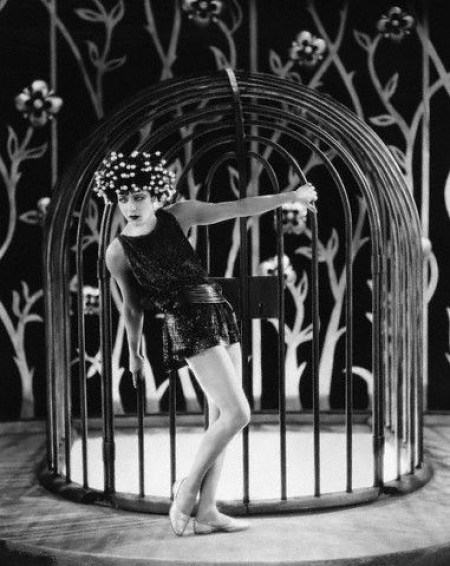
That Other Salome: 1923 Silent Classic


After what seemed like forever I finally got my hands on a copy of this now classic silent starring the then 44 year old Alla Nazimova. With amazing designs by Natacha Rambova (aka Mrs. Rudy Valentino) it is inspired by Beardsley's famous drawings. Yes, at times Nazimova at times looks her age, but then melts into a bizarre girlishness appropriate to the insanity of her charactedr.

In amazing physical shape, Nazimova often isn't wearing, sometimes bringing focus to her wig with that crown of bobbing lights. It is one of the coolest headdresses created for film. She is never subtle, but what would be the purpose of that in a silent film? What she is is electrifying, captivating even when standing still and striking one of her trademark poses, evoking, at times, Gloria Swanson in Sunset Boulevard (perhaps even inspiring Ms. Swanson?).


Earl Schenck is both beautiful and bizarre as Narraboth, in his harlequin painted tights, silver nipple discs and a necklace of beads as big as golf balls. He moves like a dancer.

Arthur Jasmine as The Page is about the feyest creature I've ever seen on screen and like everything else about this Salome, completely over the top.

No one, however, is more over-the-top than Rose Dione's termagant Herodias. Clawing, kicking Narraboth and her slaves, drunkenly flirting with a table guest hers is a frightening comical presence. She is not helped by her cave-woman hair and the most garishly painted tights in the film. Dione would later gain her "real" fame as the wonderful Madame Tetrallini in the film classic Freaks. There were moments where I thought "Cher as Morticia Addams."


Nigel De Brulier's Jokanaan seems to be modeled after Wilde himself. Nearly naked (as is much of the cast) he is positively sepulchral, his white, white skin almost glowing blue.


Interestingly there is a choice of soundtracks and I couldn't settle on one. Ultimately I ended up preferring the electronic score with "Invisible Orchestra" - a two man operation of keyboards and percussion, over the somewhat Strauss-lite, and flute heavy chamber orchestra accompaniment.


The famous dance is mesmerizing, Nazimova barely moving but riveting the attention. After the dance and execution, Nazimova's Salome is transformed by the most elaborate costume of the show, an eye-poopping gown worn beneath an enormous Turandot-like robe, completely with a stage filling train, her eyelids painted and topping everything off with a turban. Straight out of Beardsley, and a hell of a lot of fun.


Even more fun - and more visually impressive - was the bonus feature accompanying the film: Lot in Sodom. Lots of bared flesh, time-lapsed photography creating breathtakingly modern images for a film of its time.

Labels: , , , , , , , , , , , , ,

Sunday, August 31, 2014

Christine Goerke's Elektra from London: The "WOW!" Factor


I just finished listening to the live broadcast from London's Royal Albert Hall of Strauss' Elektra (my second favorite opera . . . ever) and certainly hope others got to experience this performance. It may be the single most amazing Elektra I've experienced outside of the concert hall or opera house. I didn't think she could have been better in the role than her Chicago opening night last season or her Covent Garden performances, but with more experience in the role, La Goerke really, truly sank her teeth into the meat - and the heart of Elektra.

The audience went (pardon the term) Bat-Shit-Crazy right after the final note and when the soprano came out things got even crazier. A similar roar went up for Dame Felicity Palmer. Then, when Goerke came back out the electricity went up even a notch or two higher . . . one might call it frenzied or fevered.

It's rare when your Elektra has better, lighter, yet solid high notes than her baby sister, and, as good as Gun-Brit Barkmin was as Chrysothemis, when the gals were doing their sister act, it was difficult not to notice who was more secure up there.

Johan Reuter was mighty good as Orest, and the interaction between he and Ms. Goerke led up to a Recognition Scene that was as sumptuous and gorgeous as one is likely to hear.

Maestro Bychkov shaped the score in perhaps one of the most exciting readings I've ever heard of it. The quieter moments have never sounded as intimate as he made them here. He mentioned in an earlier interview that Royal Albert Hall's acoustics - for as vast a space as it is - allows one to do things with a score one might not chance in other houses, something like "everything is possible here." He was right.

Additionally the way he handled the music following the murders was nothing short of breathtaking, the waltz beginning slow and deliberate, not the hurried madness we usually get (and love), then building and building to a positively dizzying effect that threw one (or at least me) completely off balance. It was tremendous and as overwhelming a performance overall that I have experienced of this my second favorite opera.

I think the announcer just said the broadcast will be available for 23 more days. This is happy news, indeed and one would be mad not to seize the opportunity to take advantage of this most generous gift.

Elektrifying!

Labels: , , , , , , , , , , , ,

Sunday, February 9, 2014

Remembering Behrens on Her Birthday

Today would have been Hildegard's 77th birthday. Few singers have influenced my life and love of singing as much as this great lady. It's hard to believe that this August she will have been gone five years from us.

But this is not a mournful post, but rather a celebration of her birth of one of those singers who became a polarizing force in the world of opera. People loved her, people loathed her and, often there was not much room in between.

For me, Behrens' voice was one-of-a-kind; instantly recognizable and, as with the most committed of singers, always in search of how best to serve the composer. It's interesting to me how, a few years now after her death, whenever I play her recordings for friends, the almost universal comment is, "I don't remember her voice being this beautiful," a sentiment I, who have always found that voice so beautiful, have difficulty fathoming. But, I'm just glad they do.

There were so many roles I adored her in, but none so much as the one that introduced me to her: Salome. While I grew up on other singers of the role - great ones to be sure - Behrens was the very first who made me see and hear the depraved Judean princess as a girl, and that, my friends, changed everything. There were so many touches I'd never before heard, and I recall anticipating how she would belt out that first great phrase when her bloody prize emerged from the cistern. "Du wolltest mich nicht deinen Mund," - here, most sopranos deliver the moment with either a sense of exaltation or horror movie terror . . . effective either way but with Behrens you get both . . . each one simultaneously in an explosion of sound that, naturally, changes the course of the rest of the opera. Throughout Strauss' remarkable music Behrens sweeps through combining exquisite, silvery lyricism then ramping it back up with dramatic explosions of near volcanic proportion.

I'm ranting on (as usual) wanted something up here today to honor the birthday of this amazing singer who, right up until the day she was taken from us, was still filled with the joy of music, singing, working and teaching young singers.

If anyone finds themselves with a moment to spare today (or the next few), I hope you'll do yourself a favor and listen to the final scene from that legendary EMI recording with Hildegard (here along with Karl-Walter Böhm's Herod) under
Herbert von Karajan.

http://www.youtube.com/watch?v=aZ--rkoREP0

You may be gone, but Happy Birthday, Hildegard . . . and danke danke schön, dear lady.

p.

Labels: , , , , , , , , ,

Friday, August 21, 2009

Danke Hildegard Behrens


When each of us estimate the value, the worth of another human being, we do so by several criteria. There is the value this person has to the world at large, then to the more specific "world" they inhabited, and then - more personally - the value they had to us as an individual. Though I never met this woman in person, Hildegard Behrens remains one of the most important people in my life. She has been since I was a teenager and first opened that EMI recording of her as Salome back at the start of her career and of my obsession. To say that her death has had some effect on me would be an understatement. But it is her larger-than-life personality, her artistry, the integration of everything she was and had which she shaped into one of the greatest, most challenging, thrilling artists to have graced the stage in the past century - it is these things I choose to concentrate on, to celebrate and to remember.

I remember that very first time hearing her Salome, placing those black vinyl discs onto my father's turntable and dropping the needle. The next two hours (including picking up, turning over and changing records) our living room had become the ancient Judean court of Herod and his household. The fact our house was surrounded by cedars and cypress trees giving off their scent on that warm afternoon, only added to the sense of occasion, the mystery and the allure. By its end, my entire body was covered in gooseflesh, my heart was pumping wildly and I could almost feel the blood coursing through my veins. Who was this woman?

Over the ensuing decades, I became transported by "this woman's" performances and recordings every chance I could. When she brought her Brunhilde to the Met - I remember watching the telecasts, every night, eschewing invitations from friends to watch so I could make sure my VCR was loaded with tapes enough to not miss a beat. Few evenings in life had thrilled me, had moved me, or enthralled as did those four nights in front of my television set in my little DC basement apartment.

Elektra, Elettra, Marie, Leonore, Senta, Isolde, Tosca . . . Tosca? Yes, Tosca. Though audiences seemed divided (and wildly so) on Behrens as this most Italianate of characters, Behrens remains one of my favorite Toscas. Every note, every gesture, those amazing, beautiful, liquid eyes (which would, in a few more years make the world weep as Wotan bid farewell to his daughter), the violence - wild yet fully feminine, and the most spectacular leap any diva made from a parapet, thrilled me as Tosca should. I recall the first time seeing that leap of hers - I'd never seen a Tosca jump UP from the parapet, and Behrens' Roman diva - for a moment, made me think she was willing her ascension to heaven for that meeting with Scarpia and God . . . and then the violent plunge down to earth. Brava, diva!

Not everything went swimmingly for this great lady, and I recall how, when the Met presented its new Elektra, Behrens was found wanting. A "disaster," claimed many - saying she left the house in shame, never to return. Ha! Behrens was to make one of the greatest of triumphant returns any singer had to that august company - and do so in the same role and production. I recall listening to the Saturday broadcast, and the roar that went up as the lights came back, nearly obliterated my speakers. When it was telecast, I realized I was probably watching THE video I would review and obsess over the most for the rest of my life - or at least a good part of it. Few performances of anything I've witnessed have been as emotionally raw, as heartstoppingly beautiful and terrifying - and as cathartic as "Hildegard Becomes Elektra."

A year or so after the actual event, a friend dropped in to watch this with me one hot summer night, and he used a phrase I've grown to love: "Paolo," he said, "she's singing like there's no tomorrow!" That phrase describes this lady to the teeth: singing like there's no tomorrow!

Recently I watched the now legendary Met Ring and could only sit in wonder and awe, just as I had in my youth. Perhaps more so. The entire thing moved me, but nothing more than Behrens' Brunhilde. I waivered back and forth between which I loved more, her Walkure or Gotterdammerung, and realized: I don't have to choose. Having said that, however, I can think of no more tender, beautiful moment in all of opera than Wotan's Farewell, and here, Behrens, not singing a note - turned this scene into a visual duet as James Morris - remarkable as Wotan - bade farewell to his beloved child. Though far from home, I watched this scene last night via the miracle of the internet - and its poignancy, its genius from composer and artists alike - shattered me in that way that only the greatest works of art can do.

There is so much more to say about this great lady, so many memories flood my mind and make my heart race, but they don't need to be said - they've been felt. They've been felt down to my marrow. She will always be with us and her legacy shall ever speak for itself.

Thank you, Hildegard, for the abundant joy you brought to my life. Your loss is so difficult to take, but your life and light they will continue to burn, to warm, provoke and thrill. "Ruhe, ruhe, du Gott"

Labels: , , , , , , , ,

Wednesday, July 8, 2009

McVicar's Salome: Bloody Genius


Let's get this out of the way first: With all the negatives continually hurled at Nadja Michael's voice, I happen to think she is a spectacular singer and seriously cannot understand the criticisms about her voice. Her Tosca was tough to gauge as it was mic'd onstage, but other roles I've heard now have impressed me favorably and none more than Salome. If she ain't your cup of tea, read elsewhere for a rave review follows.

Nadja Michaels may be the best Salome I've ever seen (including Mattila's stunning turns the past few years) and David McVicar's production is one of the most disturbing, brilliant and perfect weddings of music and staging I've seen for a production of ANY opera. It's the first Salome I've seen in - forever maybe - that had not one false step and seamlessly strung the evening along with shock, horror and beauty. Michael's voice was thrilling, possessing a quick flickering of the text that I haven't heard from a Salome since Cheryl Studer's recording - and before that Behrens. The text (as with the two previous ladies) flies off of her tongue, ever deliciously carressed with maximum impact on every syllable. While I try to remain impartial in matters of diva-weight, there is no denying the thrill of watching a singer whose body possesses the true and rare physique du role, as Michael's does. Her body is incredible by any standard and she truly moves with the lithe moves of a dancer gracefully throughout the entire role, which seems almost through-choreographed for her, adding a liquid sensuality from start to bloody finish one is simply unlikely to encounter in this opera. Credit Andrew George who is listed in the program as responsible party for Choreography and Movement.

I had heard so many negatives about Michael's Salome that though I've owned the disc for a while, it remained unplayed until I felt ready to hear her "out of tune" singing. I'm only sorry I waited so long, for I found little to complain of and almost everything to enjoy in her vocal interpretation. During the final scene she does exhibit a tendency to squarely land on some big notes, but then sort of slides into flatness - these notes (and one just plain "wrong" note), aside this is a thrilling performance for its totality of the character she and McVicars have created for us. With an often thrilling top end and a rich, plummy bottom we really get those truly creepy, loonytunes moments from the Judean Princess - and more than once she chills the blood.

There was much criticism of the Es Devlin's set - splitting the stage into two levels - an upper level revealing the elegant feast of Herodes and his guests, while a large staircase brings us to a basement which quite resembles another world (there have been many comparisons to Pasolini's "Salo" film and they do seem to be there). Here we find showers, people in various states of copulating and dressing, a hog hanging from a hook, and all manner of symbolism pointing toward stereotypical debauchery. It is powerfully affecting and becomes the setting for nearly of all the evening's action.

Thomas Moser gives a welcome new spin on Herodes; not as outwardly vile when we first meet him, but depraved beyond belief and disturbing. When he makes his first request for Salome to dance, he does a little Carmen Miranda number himself that's both hilarious and disturbing. He sings the music with an almost baritonal timbre to his sound and a lieder singer's precision in painting pictures with words. One or two higher notes threaten to get away, but this is the most integrated and powerful performance of this role I've yet encountered and, as with Salome herself, I love the creation director and singer come up with. Each of his requests (eat, drink, dance) he makes not only to Salome, but a sort of "stand in" for her, a handsome black slave with exotic "Island Hair" who DOES sip the wine and bite the fruit, as Herod's hands wander around him. There is so much "business" going on in every moment, but not one bit of it feels extraneous or too much, so wonderfuly is it woven into the total fabric of this show.

I was completely unprepared for the Dance of the 7 Veils which is a true coup d'theatre. The set disappears before our eyes and a series of rooms - one for each veil - moves across the stage, as Prince and Princess perform a horrifying pas de deux that McVicars and choreographer Andrew George turn into one of the most gripping pieces of theatre imaginable. The pair waltz elegantly through these tableau, each room revealing a more disturbing level of the girl's degradation and descending us further into the hellish world that formed such a bizarre creature as she. The rear wall of the stage has vivid projected images changing with each room and which help reveal even more of this bizarre couple's ritual. Whatever painstaking rehearsals were required pay off handsomely as Michaels and Moser perform this long, devilish dance with a sense of detached elegance that is both creepy and utterly beautiful. Moser is not a small man, and it is thrilling to see him waltz with such panache and style, his feet sliding across the floor like a natural dancer - not a moment of awkwardness or sloppiness - this is Herod's game and he plays it brilliantly. We don't see what happens in the final room/veil, with the set returning to its original design as Herod sings his lines re-entering the room. It's a stunning moment in an evening full of them.

Michael Volle is in remarkable voice as Jokanaan and he belts out his prophecies and denunciations of Herod's court with authority and ringing, magesterial tone. His long scene with Salome is, predictably, chilling theatre, the pair of them playing off of each other, each offering a wonderful sense of outrage and ego. Volle, more than any Jokanaan I can think of in recent times - has an animalistic sense of rage to go along with his piety. His physical manipulations of Salome may strike some as too much "off the page" but for others (like me) it's always fun seeing that there really IS more than one way to skin a cat!

Like the best Herodias's Michaela Schuster makes a meal out of her assignment, strutting and chewing up the scenery and driving her husband bananas.

Joseph Kaiser (looking like a beefy Josh Groban) sings rapturously as Narraboth and (for once) Salome looks at his corpse with a tender concern, even Herod kisses him before having him carted off. Once again, it is this kind of detail (knowing Narraboth's noble past and the affection felt for him) that makes McVicars productions so engaging - offering so much to chew on besides the obvious.

Duncan Meadows' silent executioner plays a big role here, barefoot, but dressed in a long miltary trenchcoat he hints at things to come, and, sword ever present, seemingly ready to burst into violence at any given moment. When Herodias gives him the ring, she removes his trenchcoat revealing his naked bodybuilder physique and he descends into the cistern. When he re-emerges, covered in blood, he holds aloft the prophet's head in an image instantly evoking a twisted version of Caravaggio's "David and Goliath." His dispatching of the princess at opera's end also produces some chills.

There has been criticism of Phillipe Jordan's leading of the Royal Opera House Orchestra, but I found his performance to be ideal for this setting, and if it doesn't always have the remarkable clarity that von Karajan or Bohm (or more recently Gergiev) bring to the quieter moments of this piece, it is still damned fine playing, with the big moments sounding as thrilling as anyone could demand from a live performance.

I think McVicar staged this for me and I thank him. Most of the reviews I read when this was first staged last year, spoke of how "unshocking" everything felt. One critic who attended both opening night and reviewed this DVD set, wrote that staging this work out of its context (?) takes away its ability to shock us. I disagree and LOVE what McVicar did here - which was to basically scare the you-know-what out of me, making me wonder and guess at what could possibly happen next - which almost NEVER happens anymore! While the critics all took potshots, audiences gobbled this up and the roar for Miss Michael when the curtain opens to reveal her alone, is deafening.

I really love this Salome and have been able to think of little else for two days now. Not for everyone, but what really is?

Labels: , , , , , , ,

Wednesday, September 24, 2008

Mattila IS Salome!


I wasn’t in the house for it this time, but listening to the Met’s Salome with Karita Mattila last night I felt almost as though I was. Like many in the
audience, finding my breath after those great crashing chords, I let out a roar in appreciation for what I’d just heard.

First, let me defend Patrick Summers, who I keep hearing bashed over and over again. Maestro Summers led a gorgeous, enormously lyrical while still thoroughly dramatic performance from the orchestra. Rather than the thickly textured soup some conductors can make of Strauss scores of this period, Summers brought out the widely varied colors - an array of hues from the band, revealing layer after layer of delicate, gauzy sound in best Straussian fashion. I heard solo instruments last night, where I barely - if ever - hear them in other performances, and like the Gergiev-led run of four years ago, one got to hear that deliciously creepy organ music so rarely heard in a live performance of this immensely popular work.

Vocally I was wowed from the moment the curtain rose, beginning with Joseph Kaiser’s beautifully nuanced reading. I love the slightly reedy yet smooth texture to his voice and his sense of line through this music evoked youth itself.

Mattila stunned me with the way she began the evening. There was this delicate near Mozartean lean sound, youthful, virginal yet powerful enough to swell in those few places the role calls for early on. The voice was fresh and free with everything delightfully pointed up. As the story grew darker, so frequently did the tone and color of Mattila’s voice, at times sounding like an
entirely different (and fully deranged) singer.

Sometimes a singer will insert gasps, grunts and groans for dramatic purposes, usually in lieu of being able to sufficiently convey the drama through the music. Mattila inserts these effects aplenty including sucking in air and moaning as she waits to redeem her bloody prize, and what made it all so effective was that instead of masking any deficiencies of voice, they were
merely embellishments on a deliciously over-the-top reading of vocal prowess and often gleaming sound. This sound grew and bent like a prism through Strauss’s complex score, the final scene radiant, confused and triumphant. The ultimate phrase: “Ich habe deinen Mund geküßt, Jokanaan, Ich habe ihn geküßt, deinen Mund,” found conductor and soprano stretching out the line to the point where it felt suspended in time – the aural equivalent of a gazing at a painting. After last season’s worrisome Manon Lescaut, I think more than a few of us had been holding our collective breath to see how she would do and once again Karita put on the mantle of Mattila the Magnificent!

I was unfamiliar with Ildikó Komlósi, who I found to be a very attractive and lyrical Herodias, especially against her husband’s often gruff vocalism and slightly exaggerated mannerisms provided by Kim Begley, an artist I usually enjoy more than I did last night. This was too bad, since Alan Glassman who four years ago made gave the best performance I’ve ever heard of that role, was last night singing one of the Jews.

It was difficult at first to judge Juha Uusitalo’s debut as Jokanaan. From the cistern the voice itself seemed a bit loose and hollow, which always gives me pause for concern. Later, the sound seemed freer, if somewhat tight and rather reigned in. Yet, in one or two of the explosive moments he revealed a big, thrilling sound that poured out easily, which, seemed almost to come another singer altogether - I’d like to hear more of THAT from him.

The performance flew by in the proverbial blink-of-an-eye and ran only an hour and 36 minutes, with a nice, fat ovation for Mattila and company at the end.

After the bloated excess of the opening night gala, THIS was the right way to kick off a high energy season of opera at the Met. Bravo . . . Bravissimo!

Labels: , , , , ,

Wednesday, June 4, 2008

Mattila's First Go at Salome

>Hungry (and tired of waiting) for the Met to release its DVD of Mattila as Salome, last night I watched Karita Mattila’s first go at Salome from Paris. This morning I’m still thinking about it. And still drained. While it was, perhaps, not perfect in every way, it was an entirely thrilling and completely captivating performance, and Mattila is far better than some who’ve made careers with the role, and offers far more than an inkling of just how deep this character would sink into her marrow and ooze out of her pores a season or two later when she took Manhattan by storm in Jurgen Flimm’s “controversial” production for the Met.

Director Lev Dodin’s stark, spare production for the Bastille Opera in Paris creates an enormous playing field for all of the horrors of Herod’s palace to play out. At stage left rear is a tall parapet with long staircase, while midway across the back is dominated by enormous Cypress trees lends an air of privacy – as if to close off this place from the rest of the world. A pale, moon makes its presence known wending its orbit across the rear scrim, appearing first behind the trees, then during Salome’s unraveling, as we witness an eclipse. Nice touch, that. Mattila’s Salome is a depraved wreck from the moment she sets her sandled toes onto the stage. Dodin makes us “feel” that almost everything we’re about to witness is a regular occurrence for this household.

(Note: Mattila here bears an uncanny resemblance to the actress Kim Catrell of “Sex and the City” fame). This is a hair twirling, fidgety, disaster in the making, attired in a revealing sheer black top and black “bra” (providing what pop star Ms. Aguilera refers to as “reverse cleavage,” ) as her breasts keep dropping from beneath it. (Yeah, you try not to watch!) Ever present, her taut, white belly beneath the sheer fabric can only be described as “delicious.” A free flowing black skirt appears to be woven with almost coinsized silver sparkles. Manipulative, sexually aware and willing to use her body shamelessly, this Salome’s naïveté partially blinds her to the depravity and horror all around her.

As Narraboth, William Burden looks and sounds terrific in his stylized Roman Centurion skirt and breastplate, giving off much leg, his desire for Salome captured perfectly, and yet, he recoils in shame, and horror as the Princess asks to be shown the Prophet. Understandable as she gropes and grabs at him, pressing her flesh around and into his. This girl is truly depraved and we’re watching the eye popping descent into her madness. It’s all so deliciously wrong.

Jokanaann is not buried in a cistern, but contained in a two story high prison cell hiding in the wings off stage right. For their encounter, the enormous cell slowly thrusts out from the wings all the way to the center of the stage (it must be 20 feet long), and gives the impression of a Jokanaan as a dangerous animal. As the prophet, Falk Struckmann is found in glorious voice (is he ever not?) and his attention to the text is riveting, though his costume (a ratty “saints” robe from a renaissance painting, covers that “white body” the girls sings about from head to toe) leaves much to be desired.

Chris Merritt doesn’t seem quite as depraved as he should (which in a way is more chilling) and (for the most part) sings the role better than many of the barkers we’ve grown accustomed to (though lately, I’ve noticed a trend towards aging lyrics in this role – which makes much better musical sense than a heldentenor’s swansong).

Ana Silja is not nearly as effective as I’d hoped, while playing gamely throughout (and having some good moments) she becomes, at times, inaudible and was oddly absent at the curtain call - a glaringly missed presence. (I later read she had taken ill and was replaced in subsequent performances).

The dance: Unlike most productions where the soprano disappears for a few minutes to get dressed – we realize this Salome is already ready for the dance – as she must be all the time. It’s all a little creepy. Mattila, a natural athlete, performs a sometimes sensual, sometimes violent dance, sometimes barely moving at all. But with deep lunges, crawling,, back bends, hanging upside down from Jokanaan’s prison, the panels making up her skirt begin coming off (as does the bra) until by the end, she is nude, save for the sheer black top hiding nothing. As she collapses to the floor and Herodes waxes with lusty enthusiasm, Mama, simply walks over and covers her daughter with the yellow outer robe she’d been wearing all evening and again, you sense there is a sick routine in all of this.

As Jokanaan sings and tries to shun her, Mattila’s princess climbs all over the bars her arms, violently jamming between them in unsuccessful attempts to grab the meat of this man. During that remarkable postlude of their scene, Salome hangs backwards from the bars, refusing to let go, struggling to keep him out there – and the scene of her being dragged backwards across the stage is a visually perfect counterpoint to what’s going on in the score.
It’s brilliant.

Musically, the role holds no terrors for Mattila, she sounds stunning almost always and digs into the text as few sopranos have, playing with it, teasing us – and her stepfather, every step. A few of the early on high notes have a rather unlovely quality to them, pushed and steely – not attractive, but still somehow thrilling. Warmed up, however, the Final Scene is vocally gorgeous and dramatically one of the most incredible – “can’t take your eyes off her” performances imaginable.

Her business with the head a study in understated gruesomeness, as she stares, talks to, tries to animate her prize while being alternately fascinated and horrified by it until – completely unhinged - she “goes in for the kill” as her parents – and we – watch on in utter revulsion. An interesting bit of staging for the end: Having ceased writhing (but not moaning) when her stepfather barks his final command, Salome rises, spent, but defiant, as guards appear from behind the trees and the parapet opening, where they’d been, hidden at the ready all night. A brilliant theatrical moment that leaves the exhausted soprano standing, triumphant at the audience at the black out. Paris goes mad.

James Conlon led the Paris forces in a sensual, richly colored reading – but also seemed to emphasize (rightly, in my opinion) how “weird” and “modern” this score can be. This is an odd “product” – (I got mine from premiereopera.com) with (blessedly) no subtitles, but no cast or production credits, titles or television station logo, etc. The picture is consistently good though not brilliant in the HighDef manner many seem to require these days. Sound is on the lower end of the spectrum (but clear), requiring me to keep pumping up the volume until I could get it at a satisfactory level. Whatever the source of this, I’m grateful to have it and it gives a fascinating window into Mattila’s first assumption of a role she seems to have been born to sing. And play.


p.

Labels: , , , , ,