Wednesday, April 28, 2010

Simon Keenlyside: Wigmore Hall Recital (CD)


I’ve been giving another listen to Simon Keenlyside’s wonderful Wigmore Hall recital with pianist Malcolm Martineau, given on 26 October 2008 and what a joyous celebration of song this recital is.

Opening with a set of Schubert that is not without a couple of flaws here and there, Keenlyside takes risks that seem uncommon today to recitalists today, seemingly shading texts and lines with something that approaches equal part musician and singing actor. There is a touch of huskiness when he approaches head voice that I‘m sure will drive some listeners running. For some this sort of thing simply will not do, but for those who love genuine interpretive singing those blemishes seem actually to enhance the text. Schubert’s “Verklärung“ (Transfiguration), which begins with a rather grand operatic recitative before segueing into its gentle lied the baritone alternates between almost painfully beautiful tone to hushed, slightly rasped sound . . . but with the text “let me dwindle away gently,” such an effect is (to these ears) not only welcome, but raises the song to something beyond the
beautiful noise that many lieder singers - and audiences - seem satisfied
with.

The following “Die Sterne” has a lilting, almost dance-like quality . . . and so it goes, throughout with Keenlyside making the most of every line of text, wedding it beautifully with the music and unafraid to change the tone from robust to delicate. His observations to appogiatura, turns is exemplary in each song. The Schubert set ends with that old chestnut (which seems rarely heard anymore) “Ständchen” - as lovely as I’ve heard in a very long time - and seemingly the audience as well as I can rarely recall a first set of a recital ending with cheers as well as applause.

Even better is the set of six Wolf lieder, though moments of the first “Der Knabe und das Immlein” have a couple of intonation and tonal issues which, as the singer portrays the song’s several characters sound as if they threaten to lose control. Immediately on its heels however follow absolutely gorgeous readings of “Gesang Weylas” and “An die Geliebte” that are positively swoon--inducing. The best of the Wolf, however is grandly theatrical “Lied vom Winde“ which ends with Keenlyside saying his goodbye as if he’s floating away himself. It is nothing short of brilliant musicmaking and word painting, which is what this sort of thing is all about anyway, ja?

The singer really excels at programming for each set seems to move from strength to strength and the Wolf is followed by eight gems by Fauré. His French sounds (to me anyway) near perfection, and the colors in his voice match the composer’s requirements. Again, here Keenlyside show a fearlessness with an ability to float in some head voice - usually to exquisite effect. In “En sourdine” - the richness of his voice blends to stunning effect with a natural leaning into the nasality of the language that . . . well, here comes that word again . . . “exquisite.” If he does not break your heart in “Spleen” . . . see a doctor, it may not be fixable.

I tend to love the Fauré the most, but really, Simon’s best singing comes in the Ravel that closes the recital. Here, the most beautiful part of his voice - the middle - is allowed to shine more than in any other portion of the recital. As elsewhere, Keenlyside’s attention to textures and word painting is captivating and “freed” (if that’s the right word) from the rhythmic structure of more standard poetry verse, his reaching for dramatic effects is more welcome than - even using straight tone and other vocal “effects” to maximize the wedding of word to music.

Simon gets a nice little laugh announcing his encore, Poulenc’s “Hotel” - but no laughs from the beautiful rendition he closes the recital with.

Throughout the entire program, Mr. Martineau proves to be an absolutely compelling partner to the singer, the two seemingly breathing every phrase and nuance in tandem. Even more remarkably, Martineau seems to sense what appear to be "on the spot" (though this is clearly the work of a well rehearsed team) sudden changes, as when the singer suddenly produces an instant - and ravishing diminuendo - the piano subsides immediately, giving a sense of spontaneity both rare and wonderful.

For lovers of classic style vocal recitals, this is a must have and I can’t imagine ANY fan of this wonderful singer being without this release. Get it. Seriously.

Labels: , , , , , , , , , ,

Friday, April 3, 2009

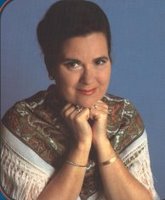
Adoring Ameling - Elly Ameling - 75 Jaar

I recently purchased and have been spending time with the 5 disc set published last year by Heartselling (with Weijman's Media Groep) in celebration of Elly Ameling's 75th birthday. The recordings are culled entirely from live performances and I can say in all honesty that for any fan of this great lady this set is a must have - a treasure trove spanning the years 1957 through 1991 and offering a remarkable glimpse into the career of one of the 20th century's most beloved artists.

 There are some surprises not only in repertoire, but in the manner in which the music itself is laid out. Undoubtedly, some would have preferred a more chronological arc essaying the career from the beginning and working through, but this set takes a non-linear path jumping across years and achieving its order by devoting each disc to a specific theme or genre. Disc 1 -Opera (1957-1988) Disc 2 - German Lied (1973-1991) Disc 3 - French Mélodies( 1979-1991) Disc 4 - French, Dutch, Italian, English, Russian (1958-1989) Disc 5 - 20th Century Dutch (1966 & 1977) Each disc is a gem - a mini-retrospective of her career and while I loved luxuriating in each of them, two stood noticeably out in my early hearings.

The first is the disc of German Lied. What we get here is not the wonderful Schubert or Brahms we know from this singer, but rather offerings from three wildly diverse giants: Berg, Mahler and Strauss. The disc opens with Berg's mini masterpiece Der Wein - a unique hybrid combining elements of his 12 tone style with a "suggested diatonic tonality" (Perle). Ameling approaches this music no differently than Bach or Mozart - i.e., with discipline, musicianship, and artistry in equal measure, making for stimulating listening full of an almost preternatural beauty. Erich Leinsdorf and the Concertgebouw Orchestra, at every level, match the singer's intensity, making a most persuasive case for this piece. We jump 20 years to two of the last recordings in the set: a pair of Mahler's Rückert Lieder. Here we have the first and most noticeable contrast of the early and late career Ameling: the vibrato is a bit slower, wider now, an unfamiliar strain appears in the top notes, the voice, still beautiful, has not quite that same youthful freshness we associate with it . . . and yet - there is magic here - real magic. As she finishes - Ich bin der Welt abhänden gekommen: Ich bin gestorben dem Weltgetümmel, Und ruh' in einem stillen Gebiet! Ich leb' allein in meinem Himmel, In meinem Lieben, in meinem Lied! (I am dead to the world's tumult, And I rest in a quiet realm! I live alone in my heaven,

In my love and in my song!) I could not help but realize how inappropriate a young, fresher voice would be here. This music cannot really be "acted" in the manner of opera, and requires instead one who understands the contentment of resignation - an artist who possesses that mature joy inherent both in the text and its music. Such gracious insight cannot be acted and comes only from a life wealthy in experience and in that regard what Elly Ameling brings to this performance is extraordinary. I dare anyone not to be profoundly moved by her singing of this lied. The following Strauss set is a delight and capped by an exquisite reading (from 1983) of the Vier letzte Lieder with Sawallisch and the Concertgebouw Orchestra. All are lovely, but Beim Schlafengehen, (my favorite) is so beautifully captured that I had to stop and replay it before moving forward. It is as lovely a version of this song as I have experienced. Similarly, in Im Abendrot, the innate warmth of Ameling's tone embraces and envelops the songs' breadth of range and expression and the top notes positively glow. With sympathetic playing from her fellow musicians these Four Last Songs make for a very special listening experience.

 The other disc that I must write about introduces two new (to me) works: Bertus van Lier's 1949 oratorio The Song of Songs for soloists, orchestra and chorus and Robert Heppener's 1925 Cantico delle Creature di San Francesco d'Assisi. In the van Lier, Ameling puts across the English text idiomatically and exotically adding to the Eastern-influenced sound of the score. While decidedly modern van Lier has more a feel of the late romantic (think Schoenberg's Gurrelieder) while remaining highly original. The work itself is often thrilling, offering great opportunities for a trio of singers, chorus and orchestra. Its being in English, makes it even more of a pity it is so infrequently given outside of Holland. The piece closing the entire box set, Heppener's cantata Cantico delle Creature di San Francesco d'Assisi, has something of the miracle about it.

As I listened I could not help but feel part of some great benediction, so caught up was I in the sense of praise and mystery and glory of the music. A gifted composer, Heppener fell victim to the avant garde craze shortly after this critically acclaimed piece premiered. nearly disappearing until remerging at 60 to begin a second composition career. His work, based on the prayer of praise of St. Francis is nothing short of stunning. Written for soprano and strings (including harp) the solo line weaves throughout, incorporating an almost dance-like rhythm, before soaring off in praise and meditation. Ameling's singing here radiates that same joy Heppener seeks to invoke from the Saint in this marvelous piece. There is a sort of universal spirituality recalling both Messiaen and Villa Lobos (and not necessarily the works one might most obviously associate with these composers).

Here, too, is an evocation of the world great cultures and religions: Russian Orthodox, Greek, and (most notably to my ear) Spain, providing a rhythmic theme to which the singer returns throughout. I've found this beautiful piece and Ameling's rendering of it, has the power to hypnotize and I've not been able to listen to it once, without beginning it again. I can think of no more joyous, way to end this project. Time and space constrain my ability to describe, but do not represent my enthusiasm for the other three discs.

The disc of opera arias allows us a glimpse into a part of Ameling's career most of her fans never had the opportunity to hear her in. In addition to some ravishingly sung Mozart (Figaro, Cosi, Idomeneo) we also get arias from Bizet, Gounod, and Maillert.

The French disc brings delightful and expressive offerings from Debussy, Duparc, Faure and Ravel. Few singers can put across Faure and Debussy as magically as Ms. Ameling showed us throughout her long career and her distinct qualities for this music are here captured brilliantly and will be for many, a beautiful walk down Memory Lane. The songs - all of them - are touching, elegant, beguiling - the singer never taking a false step or lapsing into misplaced sentimentality. Ameling is able too, to add that necessary soupcon of insouciance so few singers are able to pull off without sounding arch or artificial.

The fourth disc is a smorgasbord - as varied as the programming we could always count on in an Ameling recital: Mussorgsky, Andriessen, Stravinsky, Dallapicccola, Rossini, Tosti and more, all dispatched with that joy of singing we Ameling fans learned early on to always expect, but never took for granted. The set is accompanied by a booklet with nearly a dozen lovely photographs of the singer throughout her career, prefaced by a facsimile of a handwritten note from Ms. Ameling, for the occasion as well as also a brief biography (in Dutch) and the texts of all material included in their original languages.

 There is much to recommend here and all of it to treasure. The very uniqueness of such a set, covering such diversity of repertoire and spanning so many years make it invaluable. For fans of Ms. Ameling, this truly is a "must have" box set, but also, for younger audiences or anyone who might be unfamiliar, here is a big, wonderfully fascinating retrospective of an important artist at her work. I know of no finer recommendation than that.

Labels: , , , , , ,