Odyssey Opera Thrills with Tchaikovsky's "Maid"
Outside of the popular“Eugene Onegin” and to a lesser degree, “The Queen of Spades,” Tchaikovsky’s operas have never taken hold in the repertoire of the West’s opera houses. This is most certainly the case with “The Maid of Orleans,” which, apart from an aria lifted and performed frequently as a popular concert piece, rarely is staged anywhere. And that is, for anyone who’s seen or heard it, a crying shame. While critics often cite its libretto as unwieldy and overpopulated with unnecessary characters, the same accusations are frequently leveled at other operas, many of which have become beloved staples of the repertoire.
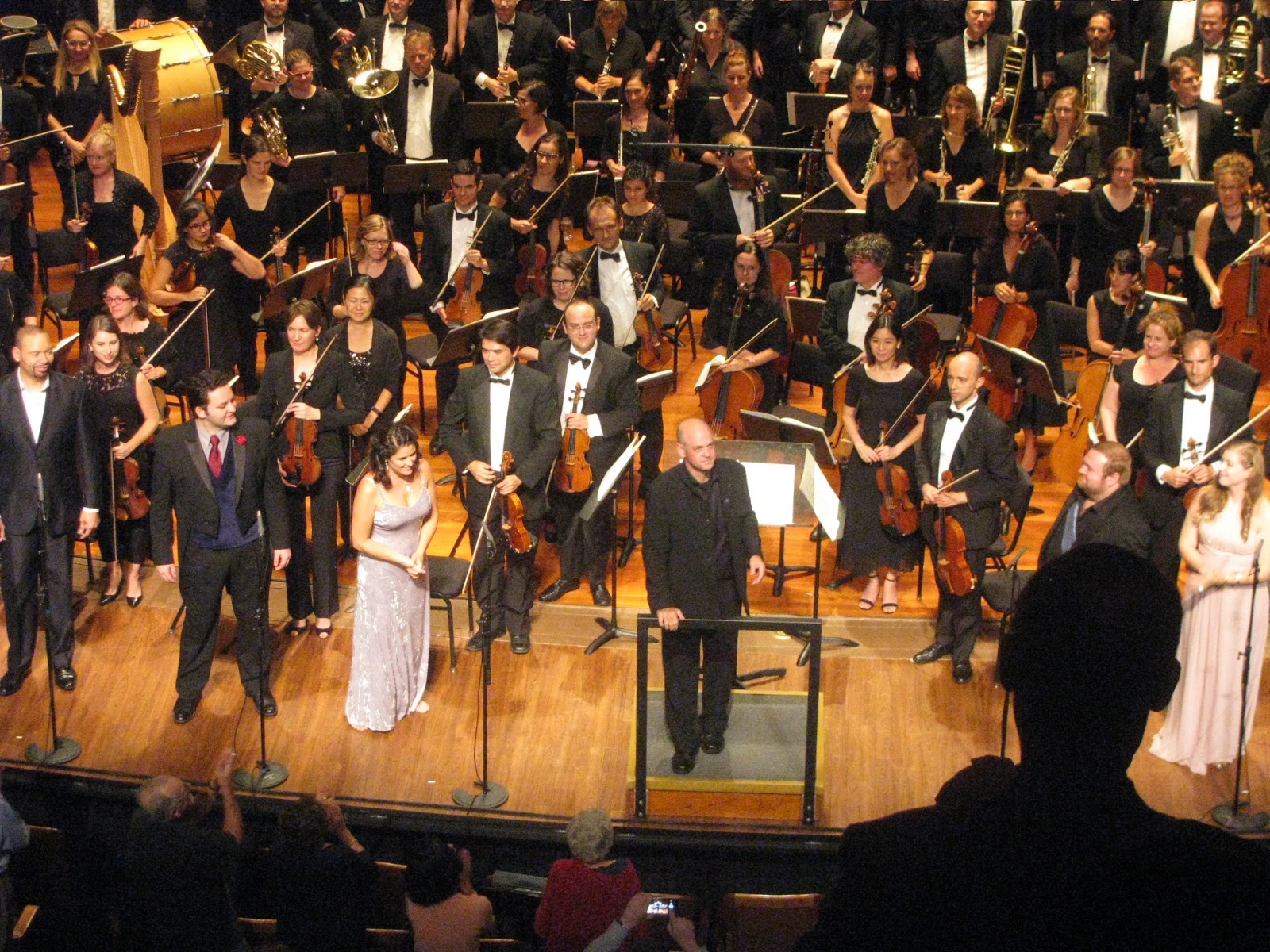
Presented in concert form, Boston’s intrepid Odyssey Opera, under the leadership of Musical and General Director, Gil Rose, made as strong a case for Tchaikovsky’s “Joan of Arc’ opera as one is likely to encounter. Over the course of its nearly four spread over four acts, Jordan Hall was filled with one of Tchaikovsky’s most inspired operatic scores, leaving an audience cheering at the end of each act – and sometimes in between.
“Maid of Orleans” rises or falls on its leading lady and here, Jordan's audience was lucky to witness mezzo Kate Aldrich scoring a triumph, adding the difficult role of Joan to an already formidable arsenal of characters. We went along with her on Joan's journey which began with a quiet, pensive defiance as she developed into the beloved, revered military prophet whose fate would so tragically turn.
Aldrich sang Joan's tender “farewell” to her homeland with moving, heart melding conviction. Following soon after comes the scene of her calling, as a chorus of angels informs her she shall never know human love and, instead of bridal vestments, to gird herself in armor and prepare to lead the French to victory. In an instant Ms. Aldrich transformed from shy teen, to inspired warrior, in both voice and visage, expressing a sense of baffled wonderment that made the seemingly impossible, wholly believable. Deploying her beautiful, medium-sized mezzo with intelligence and emotion, Aldrich skillfully scaled back her warm sound when necessary, though projecting it easily throughout the house. This technique meant there was plenty left in the tank for the singer to explode with sound at Joan's biggest moments, and here Aldrich soared, easily - even at the top of her range - over the massed forces, fearlessly, thrilling her audience. I can't imagine the role of Joan being better served.
Without benefit of staging and costumes, a savvy singer can, in their own clothing, make an even stronger impression than a “one-size-doesn’t-fit-all,” uninspired costume would otherwise allow. Let’s just say Kate Aldrich is the savviest of singers. While two striking gowns helped establish Joan’s character, Aldrich achieved a true coup de théâtre when, for her execution, she entered the stage slowly, barefoot, her previously upswept hair loosened, and clad only in a simple, gray shift, holding her score in front of her as though God’s holy writ. As the chorus sang of how young Joan appeared, and how every heart was breaking, so did ours.

A fleeting romantic alliance with her captured enemy, Lionel, changes the course of the story and seals Joan’s fate. With his rich, smooth baritone, Aleksy Bogdanov’s Lionel presented the perfect foil as he and Aldrich poured everything they had into the great love duet capturing the myriad of emotions assigned to their characters, in some of the most beautiful singing of the evening.
As Joan’s first caring then hectoring and accusatory father, Kevin Thompson displayed a big, booming sound that impressed, though a degree or two more of shading and subtlety would have been welcomed to create a character of a bit more depth. That being said, his scenes with the attractive ping of tenor Yeghishe Manucharyan’s Raymond, were exciting leaving one wishing both had a bit more to sing.
Kevin Ray – with his bright, stentorian tenor, made a strong impression as King Charles, from his despair over France’s military losses, to rapture at hearing the pronouncements of victory from the Maid of Orleans. David Kravitz, Erica Petrocelli, David Salsbery Fry, and Mikhail Svetlov filled out the character of Charles’ with lovely sound and as much depth as Tchaikovsky allowed.
Throughout the long evening, it was evident from the first to last notes, Maestro Rose is passionate about this score and, asking everything from his forces they responded as if there were no other choice. While I applaud the decision to restore cuts, in this instance the overly long ballet sequences, while showing off the orchestra's virtuosity, sounded little more than uninspired outtakes from the composer's Nutcracker and, at least for this listener, could have happily been excised and tightened the drama.
Jordan Hall’s acoustics are among the best anywhere and the “wall of sound” experience it presents listeners is one not frequently encountered and can leave jaws on the floor. Tchaikovsky’s score, with fanfares, massed ensembles and choruses, allows for plenty of that right through the raging fire music as Joan meets her grisly doom. When it all comes perfectly into play, it cannot help but leave an audience cheering. This was one of those nights.
Photographs courtesy of Kathy Boyce
Labels: 100 Years War, Boston, Gil Rose, Historical Operas, Joan of Arc, Kate Aldrich, Kevin Ray, Kevin Thompson, Odyssey Opera, Russian Opera, Tchaikovsky, Tenor
posted by Sharky at
1:08 PM
0 Comments


