Monday, September 18, 2017

Odyssey Opera Thrills with Tchaikovsky's "Maid"
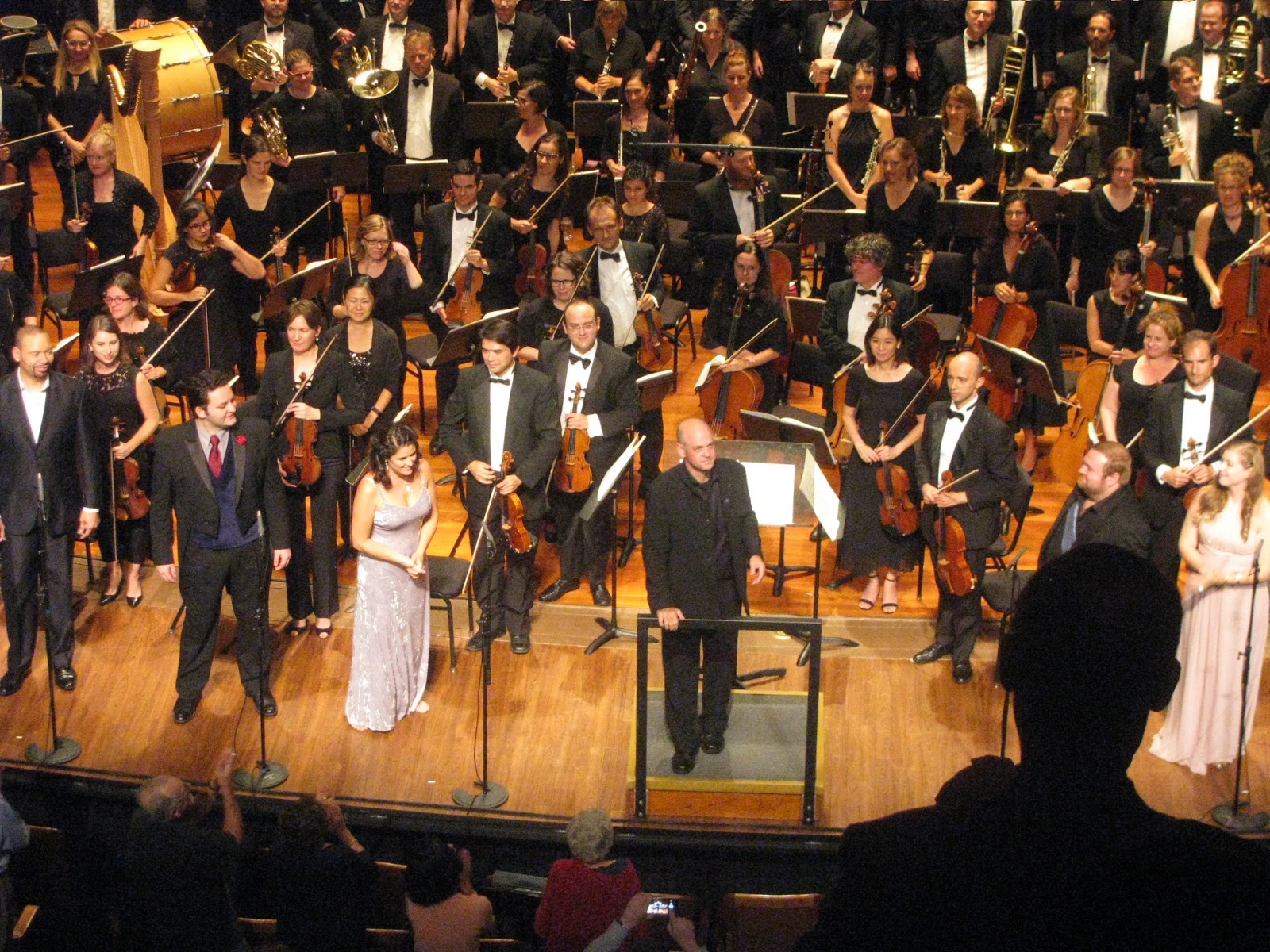

Outside of the popular“Eugene Onegin” and to a lesser degree, “The Queen of Spades,” Tchaikovsky’s operas have never taken hold in the repertoire of the West’s opera houses. This is most certainly the case with “The Maid of Orleans,” which, apart from an aria lifted and performed frequently as a popular concert piece, rarely is staged anywhere. And that is, for anyone who’s seen or heard it, a crying shame. While critics often cite its libretto as unwieldy and overpopulated with unnecessary characters, the same accusations are frequently leveled at other operas, many of which have become beloved staples of the repertoire.

Presented in concert form, Boston’s intrepid Odyssey Opera, under the leadership of Musical and General Director, Gil Rose, made as strong a case for Tchaikovsky’s “Joan of Arc’ opera as one is likely to encounter. Over the course of its nearly four spread over four acts, Jordan Hall was filled with one of Tchaikovsky’s most inspired operatic scores, leaving an audience cheering at the end of each act – and sometimes in between.

“Maid of Orleans” rises or falls on its leading lady and here, Jordan's audience was lucky to witness mezzo Kate Aldrich scoring a triumph, adding the difficult role of Joan to an already formidable arsenal of characters. We went along with her on Joan's journey which began with a quiet, pensive defiance as she developed into the beloved, revered military prophet whose fate would so tragically turn.
Aldrich sang Joan's tender “farewell” to her homeland with moving, heart melding conviction. Following soon after comes the scene of her calling, as a chorus of angels informs her she shall never know human love and, instead of bridal vestments, to gird herself in armor and prepare to lead the French to victory. In an instant Ms. Aldrich transformed from shy teen, to inspired warrior, in both voice and visage, expressing a sense of baffled wonderment that made the seemingly impossible, wholly believable. Deploying her beautiful, medium-sized mezzo with intelligence and emotion, Aldrich skillfully scaled back her warm sound when necessary, though projecting it easily throughout the house. This technique meant there was plenty left in the tank for the singer to explode with sound at Joan's biggest moments, and here Aldrich soared, easily - even at the top of her range - over the massed forces, fearlessly, thrilling her audience. I can't imagine the role of Joan being better served.

Without benefit of staging and costumes, a savvy singer can, in their own clothing, make an even stronger impression than a “one-size-doesn’t-fit-all,” uninspired costume would otherwise allow. Let’s just say Kate Aldrich is the savviest of singers. While two striking gowns helped establish Joan’s character, Aldrich achieved a true coup de théâtre when, for her execution, she entered the stage slowly, barefoot, her previously upswept hair loosened, and clad only in a simple, gray shift, holding her score in front of her as though God’s holy writ. As the chorus sang of how young Joan appeared, and how every heart was breaking, so did ours.


A fleeting romantic alliance with her captured enemy, Lionel, changes the course of the story and seals Joan’s fate. With his rich, smooth baritone, Aleksy Bogdanov’s Lionel presented the perfect foil as he and Aldrich poured everything they had into the great love duet capturing the myriad of emotions assigned to their characters, in some of the most beautiful singing of the evening.

As Joan’s first caring then hectoring and accusatory father, Kevin Thompson displayed a big, booming sound that impressed, though a degree or two more of shading and subtlety would have been welcomed to create a character of a bit more depth. That being said, his scenes with the attractive ping of tenor Yeghishe Manucharyan’s Raymond, were exciting leaving one wishing both had a bit more to sing.

Kevin Ray – with his bright, stentorian tenor, made a strong impression as King Charles, from his despair over France’s military losses, to rapture at hearing the pronouncements of victory from the Maid of Orleans. David Kravitz, Erica Petrocelli, David Salsbery Fry, and Mikhail Svetlov filled out the character of Charles’ with lovely sound and as much depth as Tchaikovsky allowed.

Throughout the long evening, it was evident from the first to last notes, Maestro Rose is passionate about this score and, asking everything from his forces they responded as if there were no other choice. While I applaud the decision to restore cuts, in this instance the overly long ballet sequences, while showing off the orchestra's virtuosity, sounded little more than uninspired outtakes from the composer's Nutcracker and, at least for this listener, could have happily been excised and tightened the drama.

Jordan Hall’s acoustics are among the best anywhere and the “wall of sound” experience it presents listeners is one not frequently encountered and can leave jaws on the floor. Tchaikovsky’s score, with fanfares, massed ensembles and choruses, allows for plenty of that right through the raging fire music as Joan meets her grisly doom. When it all comes perfectly into play, it cannot help but leave an audience cheering. This was one of those nights.

Photographs courtesy of Kathy Boyce

Labels: , , , , , , , , , , ,

Saturday, December 5, 2015

Patricia Racette Storms through Shostakovich's "Lady"


I knew I'd not be able to attend, but wondered why I hadn't heard much on U.S. soil of Patricia Racette's turn as Katerina in Stalin's favorite opera (joking!) Shostakovich's "Lady Macbeth of Mtsensk." All that changed with a simple google search and reviews and photographs were turning up everywhere calling her performance - and the production, overall, a triumph for English National Opera.

Not all of the reviews were raves - but most were - and there were tons . . . the production (and Ms. Racette) garnering the kind of excitement for an operatic event we all too rarely see or hear of here in the States.

"Patricia Racette charts Katerina’s transformation from bored, resentful chattel to emancipated woman with steely control, and unswerving musical authority;"
Andrew Clements - The Guardian

"...Patricia Racette looked remarkably close to Leskov’s original description of his girl from Kursk, small, dark-eyed and with “a high white forehead, and black, almost blue-black hair”. Her performance tended to be understated, and may not match everyone’s idea of Katerina. . . . yet Racette’s voice and presence grew as the horrors of the plot unfolded"
Fiona Maddox - The Guardian

Patricia Racette’s Katerina holds a glittering concentrate of fury in her dark eyes and her finely tempered voice. a central performance of immaculate control and engagement."
Anna Piccard "The Spectator"

"Patricia Racette, singing with sometimes raw intensity, played this repressed Katerina with impressive authority, her very stillness a window on the emotions locked within."
Richard Fairman - The Financial Times

"Patricia Racette makes us believe in her utterly as she veers between the desperation of being downtrodden in a loveless marriage to the triumph of controlling her own destiny back to the twin despairs of imprisonment and sexual betrayal, making Katerina’s extreme actions seem inevitable to us in the audience."
David Karlin - Bachtrack

"American soprano Patricia Racette ... brings authority and intensity to the title role . . . Thanks to Wigglesworth’s empowered conducting, a superb performance from ENO’s orchestra, and Racette’s consistent strength, the opera hits hard."
George Hall - The Stage

"Patricia Racette smoulders as Katerina, and John Daszak brings a fine heroic tenor to the repulsive lover Sergei . . . Mark Wigglesworth . . . brings a detailed and illuminating reading to the score. Not to be missed."
Clare Colvin - Express

"Heady stuff with great musical punch, led by Patricia Racette’s sympathetic and attractively strong Katerina, and the powerfully hedonistic Sergei of John Daszak. Her restrained movements at the start become more fluid and dramatic as she emerges from her cocoon, and his swagger and natural stage presence personify an opportunist who can’t resist her."
Mark Ronand - Theatre Review


Brava, Pat!

Labels: , , , , , , ,

Tuesday, February 18, 2014

Galina Is Katerina: The REAL Lady Macbeth of Mtsensk


I waited 30 years to see this and was not disappointed - only happy to have lived long enough to finally have this opportunity.

First off: Vishnevskaya. For those, like me, who'd only experienced this artist in concert or at the very end of her operatic career, to finally witness her in a complete role as tailor-made for her as this proves to be overwhelming. She opens the film with Katerina's boredom" aria in a voice entirely unrecognizable one that harkens back more to her jazz and nightclub singing roots than the world of opera. It as though she were channeling Billy Holiday while imitating Rosa Ponselle.

Visnhevskaya's face is unbelievable. Forget about expressions changing over the course of a film - her face becomes some great mask which frequently in less than the blink of an eye can transform her from appearing angelic, saintly, demonic, tortured, and instantly go from looking like a teenager to a run down, broken old woman. Likewise, she presents as stunning and beautiful one second and grotesquely haggard the next. To call watching her "fascinating," is an understatement.


Though she insisted she performed her own stunts in the film's tragic and violent ending (which here, are bone chillingly horrifying) they simply HAD to use a stunt double in one scene (though you can't really tell), when Katarina violently kicks out her bedroom window (which IS clearly Vishnevskaya) leaps out about 8 feet - (and almost 3 stories in the air!) dropping to a landing beneath her, then tears down the stairs like a madwoman possessed. I rewound it about 5 times to try and detect where the switch was made . . . but could not.

Mikhail Shapiro's film is gorgeously grotesque. 1966 Soviet cinema wasn't among the technically best the film world had to offer, and yet Shapiro's techniques, seems comprised of equal parts Hitchcockian hyper-realism and the surrealstic spookiness from the earliest days of film like Wiene's "Dr. Caligari." There is a visible pulsating quality in the transfer (in the original, too? I couldn't know) a sort of silent movie "flicker" in the washed out, oddly green/blue hued sepia toned color. Ingeniously, Shapiro sometimes layers image over image, such as the opening scene where we watch Katerina, sitting in a window looking out as the images she describes are projected, like home movies, against the exterior walls of her home. It is a brilliant device that early on pulls us directly into the mind of Katerina and how later, despite her brutal actions, retains our sympathy for her.

With the score so severely cut to fit within the framework of the film, we loose some truly great music, but the film version points up the very limits of ennui and violence of the tale into nearly unbearably vivid relief.

Those unfamiliar with Shostakovich's score - or scared of it - will here get some of the most tuneful and beautiful music from this opera and, as cast here, one practically revels (whenever possible) in its "Fiddler on the Roof" nightmare quality.

For the lovemaking music that begins the second act , Shostakovich draws on the romantic Russian tradition with music of ineffable sweetness, which in this context becomes as jarring and unsettling as everything that comes before or after it.

Unafraid to combine horror and hilarity, Shapiro adds yet another amazing sequence to the film when Katerina, first hears the ghost of her freshly murdered father-in-law. Onstage, this scene usually means Boris belting out his lines in white theatrical "ghost" make-up, etc. In the film, Shapiro preys on Katerina's nightmarish guilt as, truly ghostlike, he bursts through a set of doors, a nearly cartoon-like head 50 times larger than life hovering and singing over Katerina and Sergei's sleeping bodies. I found myself simultaneously laughing and cringing in horror. Yes, I loved it.

The final scenes of that endless march through Siberia is enough to chill one right to the marrow. As a big fan of Vishnevskaya, I've read her account innumerable times, but even that had not prepared me for those final, violent plunges as she takes Sonyetka down with her into that horrible, icy death. Vishnevskaya's Katerina has become absolutely unhinged, ratcheting the horror even even further in an image I won't divulge, but can honestly say one I did not see coming.

I am (for more than obvious reasons) delighted to be alive right now, but also to have lived live long enough to be able to indulge the senses with the visionary work of unknown masters of yore coming to light, like the nearly forgotten Mr. Shapiro.

Anyone on the fence about this one should just climb right over to the other side. This is truly amazing operatic filmmaking . . . vastly unlike anything one is likely to ever have seen before or since.

Labels: , , , , , , , , , ,

Saturday, January 18, 2014

Ever Onegin . . . Metropolitan Opera's New Eugene Onegin


I spent the early evening watching the Deborah Warner/Fiona Shaw production of Tchaikovsky's Eugene Onegin filmed at the Metropolitan Opera this past fall.

For the most part I enjoyed the production, though a few things I found unnecessarily challenging, and downright in the way of otherwise excellent story telling. First up was the lack of a bedroom for Tatyana's all night vigil and the opera's most famous scene. Another problem was the duel . . . I know I'm not the only person who found rifles instead of pistols just an overall bad idea.

Other than several other similarly odd choices. the production worked well, and the development of its characters and their dramatic choices/direction from the singers throughout was fascinating and frequently moving. Onegin made clear his desire not to kill his best friend, when Lensky extended his hand before the duel and Onegin grabbed and hugged him, only to be rebuffed and pushed away in order to get on with the business of death. In sinking to the ground and cradling his dead friend in his arms, we immediately sense that Onegin will be forever haunted by this unnecessary, preventable tragedy.


I'm not the greatest fan of Anna Netrebko, but Tatyana turns out to be an ideal role for her vocally and histrionically. She struck several nicely juvenile poses in her first meetings with Onegin. Nebs's Tatyana seemed a tad distant during her Name Day celebration but her development into the Princess Gremin nicely balanced a newfound maturity with a bit of the passionate girl still left in her.

Mariusz Kwiecien offered a terrifically nuanced and theatrically compelling Onegin. If not as plush or warm of voice as Hynninen, Allen, Hvorotsovsky and other great interpreters of Tchaikovsky's ennui-ridden antihero, his was a more complex and frequently more likable Eugene than we frequently get, adding to Tatyana's dilemmas both early on and at the end.

Piotr Beczala's Lensky was a bit too sunny of character making his jealous outrage and violent treatment of Olga in Act 2 seem like that of a man unhinged, a light in which I've never previously considered seeing Lensky in. Nonetheless his singing throughout, and in the duel scene particularly, was exemplary, nuanced, passionate and, ultimately, heartbreaking.


Oksana Volkova, Elena Zaremba, John Graham-Hall and most of all, Larissa Diadkova, sang well, each having invested their characters with the kind of "lived in" naturalness that aids immeasurably to the storytelling.

As Prince Gremin, Alexei Tanovitski produced some of the strangest singing I can recall; a throbbing sound with an oddly coiled vibrato, the tone itself was not entirely unpleasant, but the result was too odd for these ears not to notice.

I'm divided on the final kiss offered by Tatyana to the astonished Onegin before leaving him to crumple to the ground, hopeless, desolate . . . but no longer bored. I very much liked staging this scene outside in a nighttime winter landscape, the falling snow bestowing a chilly beauty to the almost overheated proceedings.


Valery Gergiev had things well in hand in what must have been his umpteenth performance of the Russian potboiler. Never once sounding routine Gergiev pulled out all the stops for those big, glorious Tchaikovskian climaxes which, even though coming through a home sound system, got my blood pumping just the way I always expect them to.


Labels: , , , , , , , , ,

Saturday, March 6, 2010

Attila & The Nose@ The Met


In less than 24 hours The Met has had two of the season's most exciting broadcasts on Sirius and I, for one, am one deliriously happy man!

Last night I was glued to Shostakovich's "The Nose" - so much so I was two hours late to a party - I didn't care! I'm surprised that an eighty-plus year old work would still meet with "it's too modern" or it's "all wrong notes" type of comments - and that seemingly most or all of the few comments I've so far read have been so negative (though I shouldn't be surprised by that at all).

I found the entire affair - even just over the radio - to be absolutely mesmerizing; a a glorious romp of sound with contrasts of darkness and light that overlapped perpetually in a manner that grabbed on and never let go.

Friends who attended said it was a major event and a "must be seen" live experience. I would gladly have given up half of this years HD transmissions to have had "The Nose" and "From the House of the Dead" on the HD roster. Hopefully one of the companies sharing the production will have it telecast and become available on DVD. Even if it doesn't, I'll cherish and smile at the memories of this score so beautifully - and entertainingly played over the airwaves last night.

The follow up of the Attila of Verdi this afternoon makes it al - to me at least - all the more sensational. The already typically amazing Met band sounded - from the very opening notes of the prelude to the prologue - breathtaking - amazing. The richness of the string sound was particularly lovely.

I feared what might happen when Ms. Urmana was announced as suffering from and struggling through a cold. I was not prepared for the way she hurled her voice out in "Santo di Patria" - it wasn't necessarily "pretty" singing, but it thrilled me right to the core. Later in her Act I aria she nailed a perfectly executed trill and through in a pianissimi that Caballe would have been proud of!

Vargas sounded a bit frantic - but in a good, slightly unhinged way that is not typical of him. He seemed to be - like everyone else - caught up in the fervor and the fever of it all. Even the intermission features today seemed of a higher level, with nice interviews and blurbs from Messrs. Muti, Abdrazakov and Ramey (with some nice clips of Ramey's Met debut in Rinaldo).

I read what seems to be perpetual criticism of Mr. Gelb and The Met - but too little praise for the things that go right. Last night and today show him and
his company doing things very, very right. Two so very different, contrasting works of different eras masterfully performed. Bravi!

The sun is shining bright and the past two days my home has been filled with glorious sounds orchestral and vocal from The Met. What a wonderful world this can be when we let it!

Labels: , , , , , , , , , , , ,