Monday, September 18, 2017

Odyssey Opera Thrills with Tchaikovsky's "Maid"
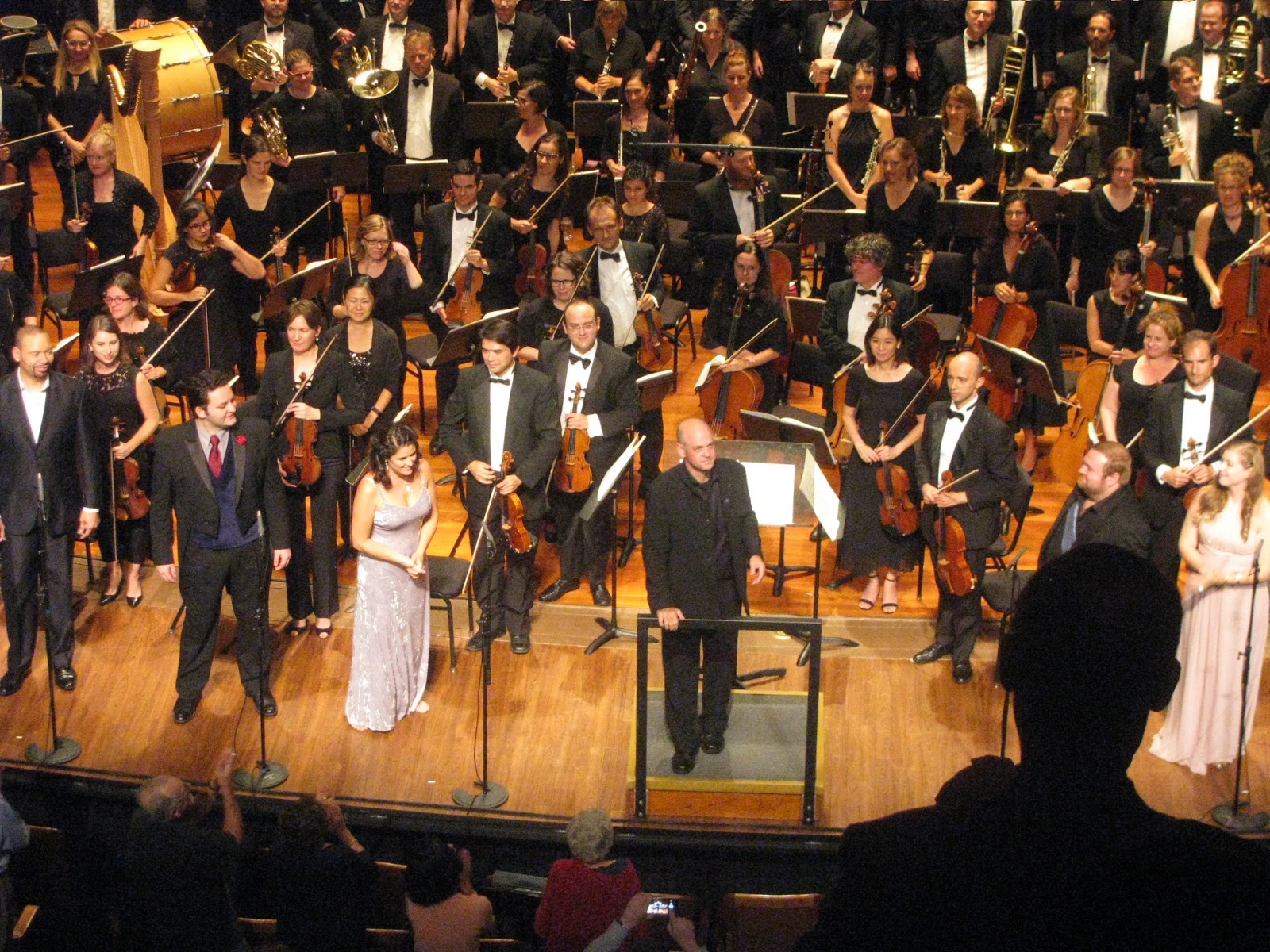

Outside of the popular“Eugene Onegin” and to a lesser degree, “The Queen of Spades,” Tchaikovsky’s operas have never taken hold in the repertoire of the West’s opera houses. This is most certainly the case with “The Maid of Orleans,” which, apart from an aria lifted and performed frequently as a popular concert piece, rarely is staged anywhere. And that is, for anyone who’s seen or heard it, a crying shame. While critics often cite its libretto as unwieldy and overpopulated with unnecessary characters, the same accusations are frequently leveled at other operas, many of which have become beloved staples of the repertoire.

Presented in concert form, Boston’s intrepid Odyssey Opera, under the leadership of Musical and General Director, Gil Rose, made as strong a case for Tchaikovsky’s “Joan of Arc’ opera as one is likely to encounter. Over the course of its nearly four spread over four acts, Jordan Hall was filled with one of Tchaikovsky’s most inspired operatic scores, leaving an audience cheering at the end of each act – and sometimes in between.

“Maid of Orleans” rises or falls on its leading lady and here, Jordan's audience was lucky to witness mezzo Kate Aldrich scoring a triumph, adding the difficult role of Joan to an already formidable arsenal of characters. We went along with her on Joan's journey which began with a quiet, pensive defiance as she developed into the beloved, revered military prophet whose fate would so tragically turn.
Aldrich sang Joan's tender “farewell” to her homeland with moving, heart melding conviction. Following soon after comes the scene of her calling, as a chorus of angels informs her she shall never know human love and, instead of bridal vestments, to gird herself in armor and prepare to lead the French to victory. In an instant Ms. Aldrich transformed from shy teen, to inspired warrior, in both voice and visage, expressing a sense of baffled wonderment that made the seemingly impossible, wholly believable. Deploying her beautiful, medium-sized mezzo with intelligence and emotion, Aldrich skillfully scaled back her warm sound when necessary, though projecting it easily throughout the house. This technique meant there was plenty left in the tank for the singer to explode with sound at Joan's biggest moments, and here Aldrich soared, easily - even at the top of her range - over the massed forces, fearlessly, thrilling her audience. I can't imagine the role of Joan being better served.

Without benefit of staging and costumes, a savvy singer can, in their own clothing, make an even stronger impression than a “one-size-doesn’t-fit-all,” uninspired costume would otherwise allow. Let’s just say Kate Aldrich is the savviest of singers. While two striking gowns helped establish Joan’s character, Aldrich achieved a true coup de théâtre when, for her execution, she entered the stage slowly, barefoot, her previously upswept hair loosened, and clad only in a simple, gray shift, holding her score in front of her as though God’s holy writ. As the chorus sang of how young Joan appeared, and how every heart was breaking, so did ours.


A fleeting romantic alliance with her captured enemy, Lionel, changes the course of the story and seals Joan’s fate. With his rich, smooth baritone, Aleksy Bogdanov’s Lionel presented the perfect foil as he and Aldrich poured everything they had into the great love duet capturing the myriad of emotions assigned to their characters, in some of the most beautiful singing of the evening.

As Joan’s first caring then hectoring and accusatory father, Kevin Thompson displayed a big, booming sound that impressed, though a degree or two more of shading and subtlety would have been welcomed to create a character of a bit more depth. That being said, his scenes with the attractive ping of tenor Yeghishe Manucharyan’s Raymond, were exciting leaving one wishing both had a bit more to sing.

Kevin Ray – with his bright, stentorian tenor, made a strong impression as King Charles, from his despair over France’s military losses, to rapture at hearing the pronouncements of victory from the Maid of Orleans. David Kravitz, Erica Petrocelli, David Salsbery Fry, and Mikhail Svetlov filled out the character of Charles’ with lovely sound and as much depth as Tchaikovsky allowed.

Throughout the long evening, it was evident from the first to last notes, Maestro Rose is passionate about this score and, asking everything from his forces they responded as if there were no other choice. While I applaud the decision to restore cuts, in this instance the overly long ballet sequences, while showing off the orchestra's virtuosity, sounded little more than uninspired outtakes from the composer's Nutcracker and, at least for this listener, could have happily been excised and tightened the drama.

Jordan Hall’s acoustics are among the best anywhere and the “wall of sound” experience it presents listeners is one not frequently encountered and can leave jaws on the floor. Tchaikovsky’s score, with fanfares, massed ensembles and choruses, allows for plenty of that right through the raging fire music as Joan meets her grisly doom. When it all comes perfectly into play, it cannot help but leave an audience cheering. This was one of those nights.

Photographs courtesy of Kathy Boyce

Labels: , , , , , , , , , , ,

Wednesday, September 24, 2014

History of the Metropolitan Opera's Opening Nights


I've been in several recent discussions regarding opening nights at the Metropolitan Opera. I'd mentioned I found this year's choice, "Le Nozze di Figaro" to be an unusual, but lucky one. Several friends disagreed saying it wasn't unusual at all and that it could work. I agreed that it could (and does) work, but still maintain for the Met it's an unusual choice. (The Met has only opened with it one other season, back in 1941).

The history of Met Opening Nights is fascinating, with the most frequent opera appearing to be Aida, the choice for
eleven seasons. Otello opened seven seasons and Faust and Roméo et Juliette each opened six.

I find it odd, and perhaps it's just a personal issue, but I'm not in favor of, as has happened several times in the Met's history using a Gala Concert to open the season in lieu of an actual opera performance. I'm sure, however, others would prefer this kind of evening but I don't call them opera lovers!

Following is a list of the Met's Opening Nights.

1883: Faust
1884: Tannhauser
1885: Lohengrin
1886: Die Königin von Saba
1887: Tristan und Isolde
1888: Les Huguenots
1889: Der Fliegende Holländer
1890: Asrael
1891: Roméo et Juliette
1892: (No Season)
1893: Faust
1894: Roméo et Juliette
1895: Roméo et Juliette
1896: Faust
1897: (No Season)
1898: Tannhäuser
1899: Roméo et Juliette
1900: Roméo et Juliette
1901: Tristan und Isolde
1902: Otello
1903: Rigoletto
1904: Aida
1905: La GIoconda
1906: Roméo et Juliette
1907: Adriana Lecouvreur
1908: Aida
1909: La Gioconda
1910: Armide
1911: Aida
1912: Manon Lescaut
1913: La Gioconda
1914: Un Ballo in Maschera
1915: Samson et Dalila
1916: Les Pêcheurs de Perles
1917: Aida
1918: Samson et Dalila
1919: Tosca
1920: La Juive
1921: La Traviata
1922: Tosca
1923: Thaïs
1924: Aida
1925: La Gioconda
1926: La Vestale
1927: Turandot
1928: L'Amore dei Tre Re
1929: Manon Lescaut
1930: Aida
1931: La Traviata
1932: Simon Boccanegra
1933: Peter Ibbetson
1934: Aida
1935: La Traviata
1936: Die Walküre
1937: Tristan und Isolde
1938: Otello
1939: Simon Boccanegra
1940: Un Ballo in Maschera
1941: Le Nozze di Figaro
1942: La Fille du Régiment
1943: Boris Godunov
1944: Faust
1945: Lohengrin
1946: Lakmé
1947: Un Ballo in Maschera
1948: Otello
1949: Der Rosenkavalier
1950: Don Carlo
1951: Aida
1952: La Forza del Destino
1953: Faust
1954: Gala Concert (Telecast)
1955: Les Contes d'Hoffmann
1956: Norma
1957: Eugene Onegin
1958: Tosca
1959: Il Trovatore
1960: Nabucco
1961: La Fanciulla del West
1962: Andrea Chénier
1963: Aida
1964: Lucia di Lammermoor
1965: Faust
1966: Antony and Cleopatra
1967: La Traviata
1968: Adriana Lecouvreur
1969: Aida
1970: Ernani
1971: Don Carlo
1972: Carmen
1973: Il Trovatore
1974: I Vespri Siciliani
1975: The Seige of Corinth
1976: Il Trovatore
1977: Boris Godunov
1978: Tannhäuser
1979: Otello
1980: Mahler: Symphony No. 2
1981: Norma
1982: Der Rosenkavalier
1983: Les Troyens
1984: Lohengrin
1985: Tosca
1986: Die Walküre
1987: Otello
1988: Il Trovatore
1989: Aida
1990: La Boheme
1991: Gala Concert (25th Lincoln Center Anniversary - Telecast)
1992: Les Contes d'Hoffmann
1993: Gala Concert: 25th Anniversaries of Domingo & Pavarotti
1994: Il Tabarro & Pagliacci (Unheralded 35th Anniversary for Stratas)
1995: Otello
1996: Andrea Chénier
1997: Carmen
1998: Samson et Dalila
1999: Cavalleria Rusticana & Pagliacci
2000: Don Giovanni
2001: Gala: A Celebration of Verdi
2002: Gala: Fedora Act 2; Samson et Dalila Act 2; Otello Act 4
2003: La Traviata
2004: Otello
2005: Gala: Nozze di Figaro Act 1; Tosca Act 2; Samson et Dalila Act 3
2006: Madama Butterfly
2007: Lucia di Lammermoor
2008: Renee Fleming Gala
2009: Tosca
2010: Das Rheingold
2011: Anna Bolena
2012: L'Elisir d'Amore
2013: Eugene Onegin
2014: Le Nozze di Figaro

Labels: , , , , , , , , , , , ,

Saturday, January 18, 2014

Ever Onegin . . . Metropolitan Opera's New Eugene Onegin


I spent the early evening watching the Deborah Warner/Fiona Shaw production of Tchaikovsky's Eugene Onegin filmed at the Metropolitan Opera this past fall.

For the most part I enjoyed the production, though a few things I found unnecessarily challenging, and downright in the way of otherwise excellent story telling. First up was the lack of a bedroom for Tatyana's all night vigil and the opera's most famous scene. Another problem was the duel . . . I know I'm not the only person who found rifles instead of pistols just an overall bad idea.

Other than several other similarly odd choices. the production worked well, and the development of its characters and their dramatic choices/direction from the singers throughout was fascinating and frequently moving. Onegin made clear his desire not to kill his best friend, when Lensky extended his hand before the duel and Onegin grabbed and hugged him, only to be rebuffed and pushed away in order to get on with the business of death. In sinking to the ground and cradling his dead friend in his arms, we immediately sense that Onegin will be forever haunted by this unnecessary, preventable tragedy.


I'm not the greatest fan of Anna Netrebko, but Tatyana turns out to be an ideal role for her vocally and histrionically. She struck several nicely juvenile poses in her first meetings with Onegin. Nebs's Tatyana seemed a tad distant during her Name Day celebration but her development into the Princess Gremin nicely balanced a newfound maturity with a bit of the passionate girl still left in her.

Mariusz Kwiecien offered a terrifically nuanced and theatrically compelling Onegin. If not as plush or warm of voice as Hynninen, Allen, Hvorotsovsky and other great interpreters of Tchaikovsky's ennui-ridden antihero, his was a more complex and frequently more likable Eugene than we frequently get, adding to Tatyana's dilemmas both early on and at the end.

Piotr Beczala's Lensky was a bit too sunny of character making his jealous outrage and violent treatment of Olga in Act 2 seem like that of a man unhinged, a light in which I've never previously considered seeing Lensky in. Nonetheless his singing throughout, and in the duel scene particularly, was exemplary, nuanced, passionate and, ultimately, heartbreaking.


Oksana Volkova, Elena Zaremba, John Graham-Hall and most of all, Larissa Diadkova, sang well, each having invested their characters with the kind of "lived in" naturalness that aids immeasurably to the storytelling.

As Prince Gremin, Alexei Tanovitski produced some of the strangest singing I can recall; a throbbing sound with an oddly coiled vibrato, the tone itself was not entirely unpleasant, but the result was too odd for these ears not to notice.

I'm divided on the final kiss offered by Tatyana to the astonished Onegin before leaving him to crumple to the ground, hopeless, desolate . . . but no longer bored. I very much liked staging this scene outside in a nighttime winter landscape, the falling snow bestowing a chilly beauty to the almost overheated proceedings.


Valery Gergiev had things well in hand in what must have been his umpteenth performance of the Russian potboiler. Never once sounding routine Gergiev pulled out all the stops for those big, glorious Tchaikovskian climaxes which, even though coming through a home sound system, got my blood pumping just the way I always expect them to.


Labels: , , , , , , , , ,

Tuesday, August 19, 2008

Salzburg Hit Onegin: More Miss Than Hit


Last year it seemed absolutely everyone at Salzburg was clamoring about director Andrea Breth’s monumental, updated production of “Eugene Onegin” and indeed, it was one of the most reviewed performances I’ve ever read of – I pored over some 30 reviews of the opening night – and nearly each seemed to be outpraising the previous in the heaping on of superlatives. I saw several clips while the show was still running and found what I saw enticing in the extreme. Well, now having watched the entire thing on DVD, twice I’m not as excited. Musically, I find it thrilling and eye opening, but dramatically it runs from red hot - like a fire poker in the eye – to luke warm.

There’s not a thing wrong with strong willed directors wanting to update and take a fresh look at an old classic – I WELCOME it - but when the will of the director blatantly ignores what is happening in the music imposing his or her will OVER what the director intends – then I have a problem. And I had problems here.

As terrific as Anna Samuil is in the Letter Scene, dramatically there was something lacking – something in need of tightening up – not on the heroine’s part, but on the director’s. The decision to not have her in pajamas or a nightgown proved, for me at least, a seemingly inconsequential, but ultimately glaring mistake. Breth has already made us aware this Tatyana is no shrinking violet – is, in fact, a strong willed (and slightly spoiled), young woman. But she’s still a girl and we need SOME vulnerability and there was next to none found here. Despite Samuil’s lovely shaded singing, magnificent lighting (car lights shining through the woods and windows) . . . despite incredible stage machinery rotating the sets showing Tatyana tearing through the house and out into the woods with what can only be described as “love fever,” we do not quite get (or at least I did not get) the sense that her epistle to Mr. O was particularly difficult, much less an all night vigil. Even having her remain in the same jeans for several days didn’t really convey that. There absolutely MUST be the element of the girl’s restlessness, of her insomnia, of night passing into day and it could have been as easily remedied by giving the gal a goddamned nightgown. Having her sit, pensive, noisily pecking away at a typewriter was for me a rather novel idea – just not a particularly good dramatic one. Just me I guess.

Earlier on, in one of the very best, liveliest,and most infectious peasant choruses in all of opera, the Larin servants, farmhands and neighbors perform it motionless as a chorus of automatons arranged properly in concert formation, faces stripped of any emotion as we watch the ghastly attired Madam Larina (her hair in curlers no less) frolicking with a pair of moppets (and nearly showing us her “business” in the process).

Peter Mattei (one of my favorite baritones) makes Onegin entirely unappealing, eliciting almost no sympathy for his plight. Onegin already IS somewhat unappealing, but to burden him now with a jaded, been-there-done-that playboy attitude misses Onegin’s point entirely. To Mattei’s credit he sounds terrific and follows, to the letter, his directress’s whims turning a melancholy, ennui-ridden young man into a mean-spirited, selfish and arrogant prick. Great.

Much was been made about Breth’s total transformation of Madame Larina and it’s true: few characters have morphed so entirely as the Larin girls’ mama. Instead of a kindly, pensive disillusioned, broken-dreamed, still elegant and intelligent woman we’re given a gaudy, shrewish, manipulative, self-obsessed cow. Wonderful.

I also had to scratch my head at the rambunctious, drunk fest that took the place of Tatyana’s name day celebration. Do people really find this that innovative? Does this add anything at all to the drama? I don’t think so.

And speaking of parties and celebrations, I will NOT apologize for finding the current directorial fad of removing the Third Act Polannaise to be a mistake. It is, in fact one of the most yawn-inducing clichés perpetuated upon the world of opera in the last decade. And there have been a lot. (Oddly, Carsen’s re-working of it for the Met, is the only example of where it worked. All others, including this one, fail miserably in my opinion). Breth here makes a little joke: Ha ha! I’m going out on a limb here, but in, say, 20 years or so some hot shot Austrian playwright making his operatic debut in Onegin will DARE to place the women into Empire gowns, the men in tails and fill the stage with gilded mirrors and crystal chandeliers as couples elegantly glide round the stage in sophisticated choreographed formations and the audience drop their jaws thinking “My, God! It’s almost as though this music was MADE for this!”

Sorry to spoil the party that everyone else enjoyed (I guess I’m just a bad guest!) but it felt to me that Breth was trying hard to make Onegin an intense, unsettling, brooding dark opera, a statement on class distinctions and society – as well as on boredom and honor. The problem is Tchaikovsky already did that and what I feel was chiefly achieved here was merely an accentuation of the ugliness of these characters . . . and unattractive costumes.

I was amazed by Martin Zehetgruber's elaborate sets – magnificent in every regard – and I would love to see another stab at this Onegin as despite how I may come off here, I think Breth has some very good ideas: the portrayal of this matriarchal society; the Larina disdain for peasants and workers; Madame Larina’s sheering the men like sheep; the contrast between the “old ways” still being hung to by Filipevna with the new world ideas of Madame L.; the disdain and boredom of the strong-willed Tatyana (having Filipevna die, unnoticed by the girl she did everything for, chilling . . . brilliant); the duel – heartbreaking; the blazing intensity of the final scene – there is plenty of good stuff here, I just found it all didn’t come together for me as for everyone else.

With so much attention lavished on the principal pair of non-lovers, the majority of characters almost fade which is a shame as all of the vocal performances here are outstanding, particularly Joseph Kaiser’s charmingly idealistic and more youthful sounding than usual, Lensky and Ferruccio Furlanetto’s glorious turn as Gremin.

Musically, Daniel Barenboim gives one of the most frenetic, violent readings of this score – make that THE most violent reading of the score anyone has probably ever heard – the tensions at times are almost unbearable. Unfortunately, regardless of what anybody else has written (maybe they were swept away by the passion) it was a sloppy, inelegant reading from the Vienna Philharmonic, with intonation problems, rifts between stage and pit, uneven entrances from the orchestra itself (a lot of this). It is thrilling, in that way surviving a ride on a high speed, broken rollercoaster is thrilling – but I’m pretty sure I’d never want to get on again.

There is clearly an audience for this – and I will try to come back to it, but I can think of a half dozen other “Onegins” on DVD (more if you add pirates) that are ultimately far more satisfying: particularly Graham Vick’s production for Glyndebourne; and Robert Carsen’s minimalist, brilliant production for the Metropolitan Opera.

Labels: , , , , , ,