All of Us Strangers: As Good As It Gets

This is not so much a review. as it is just me thinking out loud about a movie that . . . well, destroyed me sounds about right.
So, movie fans: Do you like ghost stories? Do you like sad stories? Do you like films that leave you with more questions at the end than you had at the beginning? Are stories that are mercurial, confusing, illusive and open to interpretation up your alley? If so, Andrew Haigh's All of Us Strangers is the movie you need to see. Right away.
Haigh is one of those queer directors whose work, although generally centered on gay stories, transcends genre and speaks to us all as humans. Lonely, hopeful, wondering, wandering, vulnerable, and not-as-tough as we think we are, humans. I've liked everything of Haigh's I've so far seen, but All Of Us Strangers, goes straight to the top for me - and not only of Haigh's filmwork, but of any recent cinema, period. I will even argue this is as masterful a piece of filmmaking as anything being nominated for all the other awards. To me, All Of Us Strangers, is an indisputable masterpiece, every element of Haigh's project perfection: script, cast, acting, lighting and the striking a balance between what may seem real and what is dreamed or imagined. Along with a well chosen (and sometimes "obvious" but not in any bad way - sometimes we need obvious) soundtrack its music . . . all of it fits together like a symphony of perfect parts.
Speaking of symphonies, Haigh takes us on a voyage that immediately brought me to mind of two works: Richard Danielpour's Symphony No. 3: Journey Without Distance, and the very work which inspired it: Helen Schucman's, massive (1400 pages) A Course In Miracles.
A Course in Miracles is a metaphysical, spiritual journey that teaches the power of transformation through healing relationships, asserting that the greatest miracle is the act of simply gaining a full awareness of love's presence in a human life. Schucman tells us - reassures us:
Of the knowledge of where you are always and what you are forever.
It is a journey without distance
To a goal that has never changed.
What was a place of death
Has now become a living temple
In a world of light.

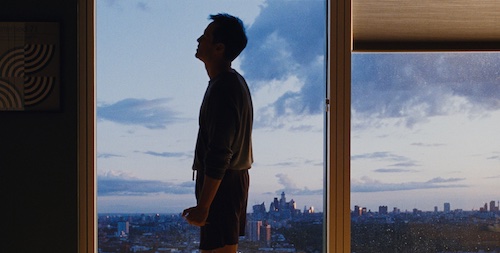
The performances of the four principals are flawless. Absolutely. Truly. Andrew Scott (who I first met as the brilliant, twisted, Moriarty in Sherlock ) captures every essence of the lonely soul that is Adam. Filled with doubt, confused and conflicted about his importance or relevance in the world, he downplays every aspect of his life. All of this bleeds marvelously through his face and body, the physicality speaking volumes.
Paul Mescal's Harry, with a near identical agenda, is even more wounded than Adam, but in contrast, wears his heart upon his sleeve - ("for daws to peck at" as Iago would say). Both of these men have smiles that could make a grown person want to cry . . . so much being revealed through their silence those smiling faces. For me, from the very beginning, Mescal's Harry felt like a ghost - a spirit wandering and never sure if he is here or not, but very much wanting to be.
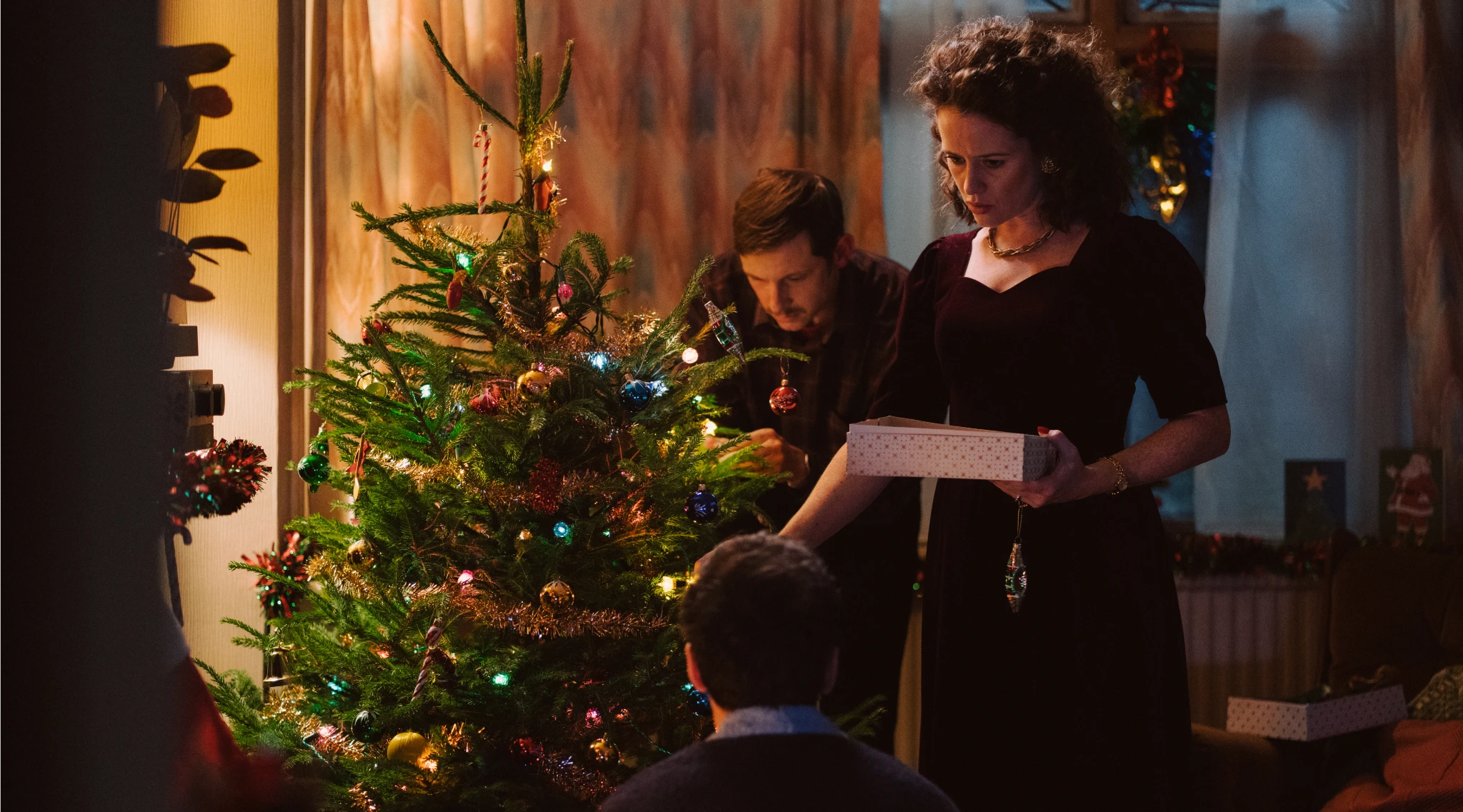
Clare Foy as Mom, is a middle class product of her time, from her hairstyle and jewelry down to her seeming reluctance to embrace her grown son's gayness. But it is quickly established this is not rejection, but is rather born of a mother's fear of the difficult road ahead for this child she clearly loves, who will face, she believes, a world of prejudice, homophobia, AIDS, and worst of all, loneliness. Adam is able to reassure her the world has changed since then, but does he believe this himself? He feels to be offering his mum comfort more than living this reality. But a mother always worries, and I was struck by her final words to him, making him promise that he will try a life with "this Harry boy. I'd have liked him, I just know it."
Rarely getting the credit he deserves Jamie Bell has nonetheless established himself - at least in my estimaton - as one of the finest actors we have, and his work here as Dad, (entirely different from the last works I've seen him in), is a masterclass in subtlety as he creates an outwardly simple man truly proud of his boy, even as he admits his shame for feeling he was not the father he knew he should have been. Bell's work here is noble. And heartbreaking.

If you've not seen it, that's all you really need to know. If you have seen it, you're going to want to find a friend to have a coffee with for a few hours of conversation to explore every facet, of this wondrous little movie. Even though it's 2024, I've adjusted my Top Movies of 2023, to put All Of Us Strangers near the very top. It's that good.

Labels: All Of Us Strangers, Andrew Haigh, Andrew Scott, Claire Foy, Gay cinema, ghost story, Helen Schucman, Jamie Bell, Journey Without Distance, Miracles, Paul Mescal, Richard Danielpour, the power of love
posted by Sharky at
5:21 PM
0 Comments


