Monday, September 18, 2017

Odyssey Opera Thrills with Tchaikovsky's "Maid"
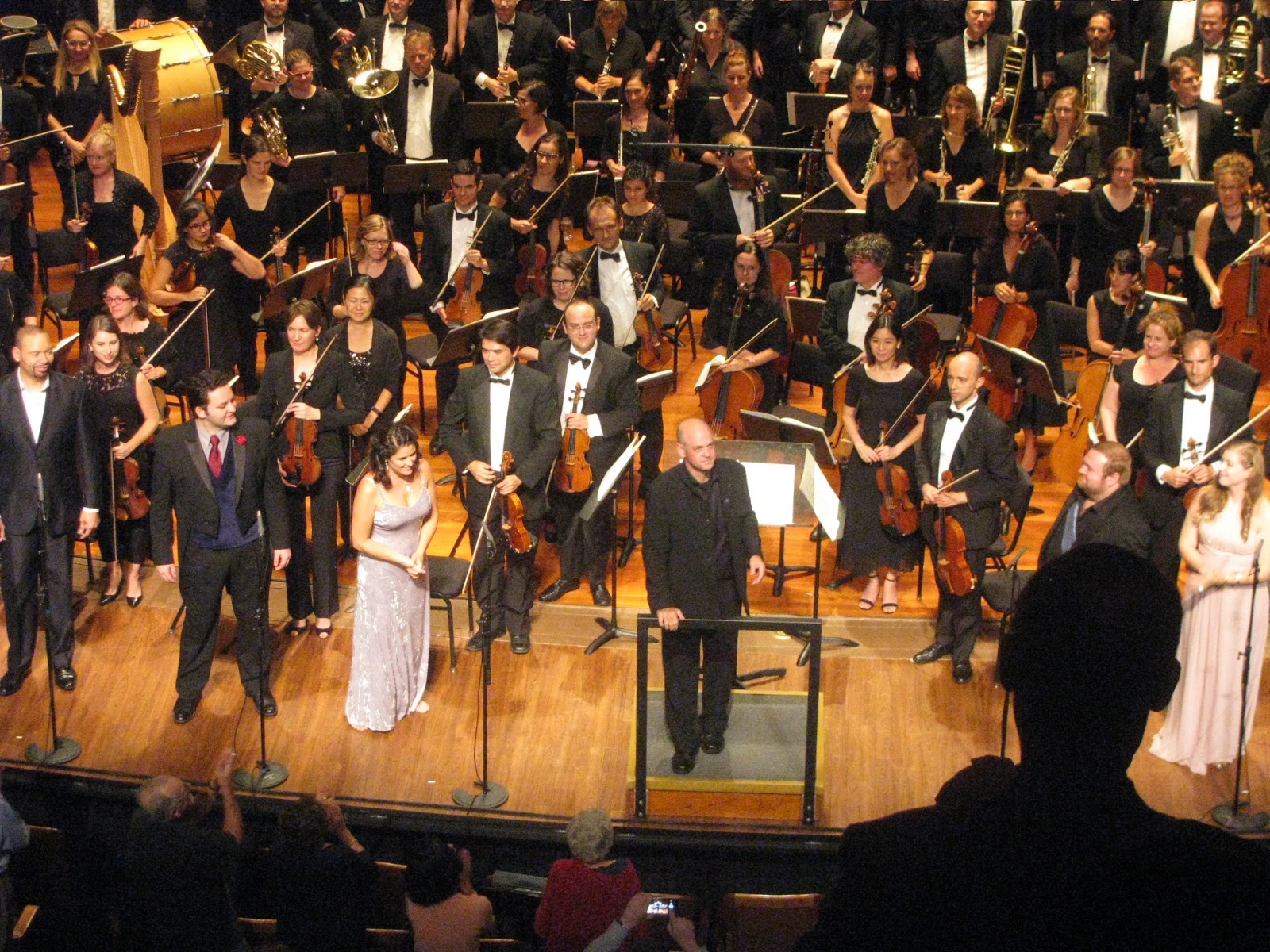

Outside of the popular“Eugene Onegin” and to a lesser degree, “The Queen of Spades,” Tchaikovsky’s operas have never taken hold in the repertoire of the West’s opera houses. This is most certainly the case with “The Maid of Orleans,” which, apart from an aria lifted and performed frequently as a popular concert piece, rarely is staged anywhere. And that is, for anyone who’s seen or heard it, a crying shame. While critics often cite its libretto as unwieldy and overpopulated with unnecessary characters, the same accusations are frequently leveled at other operas, many of which have become beloved staples of the repertoire.

Presented in concert form, Boston’s intrepid Odyssey Opera, under the leadership of Musical and General Director, Gil Rose, made as strong a case for Tchaikovsky’s “Joan of Arc’ opera as one is likely to encounter. Over the course of its nearly four spread over four acts, Jordan Hall was filled with one of Tchaikovsky’s most inspired operatic scores, leaving an audience cheering at the end of each act – and sometimes in between.

“Maid of Orleans” rises or falls on its leading lady and here, Jordan's audience was lucky to witness mezzo Kate Aldrich scoring a triumph, adding the difficult role of Joan to an already formidable arsenal of characters. We went along with her on Joan's journey which began with a quiet, pensive defiance as she developed into the beloved, revered military prophet whose fate would so tragically turn.
Aldrich sang Joan's tender “farewell” to her homeland with moving, heart melding conviction. Following soon after comes the scene of her calling, as a chorus of angels informs her she shall never know human love and, instead of bridal vestments, to gird herself in armor and prepare to lead the French to victory. In an instant Ms. Aldrich transformed from shy teen, to inspired warrior, in both voice and visage, expressing a sense of baffled wonderment that made the seemingly impossible, wholly believable. Deploying her beautiful, medium-sized mezzo with intelligence and emotion, Aldrich skillfully scaled back her warm sound when necessary, though projecting it easily throughout the house. This technique meant there was plenty left in the tank for the singer to explode with sound at Joan's biggest moments, and here Aldrich soared, easily - even at the top of her range - over the massed forces, fearlessly, thrilling her audience. I can't imagine the role of Joan being better served.

Without benefit of staging and costumes, a savvy singer can, in their own clothing, make an even stronger impression than a “one-size-doesn’t-fit-all,” uninspired costume would otherwise allow. Let’s just say Kate Aldrich is the savviest of singers. While two striking gowns helped establish Joan’s character, Aldrich achieved a true coup de théâtre when, for her execution, she entered the stage slowly, barefoot, her previously upswept hair loosened, and clad only in a simple, gray shift, holding her score in front of her as though God’s holy writ. As the chorus sang of how young Joan appeared, and how every heart was breaking, so did ours.


A fleeting romantic alliance with her captured enemy, Lionel, changes the course of the story and seals Joan’s fate. With his rich, smooth baritone, Aleksy Bogdanov’s Lionel presented the perfect foil as he and Aldrich poured everything they had into the great love duet capturing the myriad of emotions assigned to their characters, in some of the most beautiful singing of the evening.

As Joan’s first caring then hectoring and accusatory father, Kevin Thompson displayed a big, booming sound that impressed, though a degree or two more of shading and subtlety would have been welcomed to create a character of a bit more depth. That being said, his scenes with the attractive ping of tenor Yeghishe Manucharyan’s Raymond, were exciting leaving one wishing both had a bit more to sing.

Kevin Ray – with his bright, stentorian tenor, made a strong impression as King Charles, from his despair over France’s military losses, to rapture at hearing the pronouncements of victory from the Maid of Orleans. David Kravitz, Erica Petrocelli, David Salsbery Fry, and Mikhail Svetlov filled out the character of Charles’ with lovely sound and as much depth as Tchaikovsky allowed.

Throughout the long evening, it was evident from the first to last notes, Maestro Rose is passionate about this score and, asking everything from his forces they responded as if there were no other choice. While I applaud the decision to restore cuts, in this instance the overly long ballet sequences, while showing off the orchestra's virtuosity, sounded little more than uninspired outtakes from the composer's Nutcracker and, at least for this listener, could have happily been excised and tightened the drama.

Jordan Hall’s acoustics are among the best anywhere and the “wall of sound” experience it presents listeners is one not frequently encountered and can leave jaws on the floor. Tchaikovsky’s score, with fanfares, massed ensembles and choruses, allows for plenty of that right through the raging fire music as Joan meets her grisly doom. When it all comes perfectly into play, it cannot help but leave an audience cheering. This was one of those nights.

Photographs courtesy of Kathy Boyce

Labels: , , , , , , , , , , ,

Saturday, April 16, 2016

Killing Carmen: Thoughts on a Classic


I’m lucky. It has never been a requirement of mine that I like, or even particularly admire, anyone in order to find them fascinating enough to want to watch or read about them. This is as true of fictional characters as it is of historical, or even currently alive persons.

I think somehow many of us feel “guilty” for watching things like Carmen because we’re preoccupying ourselves with a central character possessing so little, if anything, perceived as redeemable. And yet Carmen remains an eternally interesting character, and, as with many other colorful criminals or outcasts of society, we become fascinated . . . mesmerized even . . . by the way they work in lives vastly different than our own.
As with any stage creature, Carmen opens herself to a wide variety of interpretations, and while many view her as being an archetypal character (in the Jungian sense), I don’t think she is. Not at all, in fact.  I believe in Carmen less as a symbol, and more as genuinely, deeply flawed character who lives out her days according to her own set of principles: the rest of the world be damned. While she may come across as over-the-top, nothing she does, according is ever really too much - or enough so as to make her the comically unbelievable character many choose to see her as. Still, all of the symbolsim we typically associate with the archetype of such a character can actually add to our enjoyment, even when we don't fully grasp it, or disagree with one another as to what it all means.

When first we meet our Carmencita, she’s working at the cigarette factory, and we like her.  We like her mostly because she's colorful, and likes to sing and dance a lot. But, ah, she also likes to fight. She's what some might call a spicy lady.  While she may seem like a fun girl who just gets into the occasional bit of trouble, the fact of the matter is this:  from the outset, Carmen is a criminal.  

The most famous number in the opera, the Habanera, is  simply Carmen taking in the lay of the land, scoping out a possible escape from the trouble she's already planned on getting into. She can't help herself.  As she sings and mesmerizes the crowd, she identifies José 
as someone she can use; a man to trick - to manipulate into doing whatever it is she needs him to do. She senses through instinct or her powers of observation he will likely do her bidding, possibly most willingly.  Does she sense his weakness? His criminal past? Ever shrewdly attuned to all that is around her, Carmen senses this from the very beginning.  It's not too far a stretch for us to believe she'd initiate a factory fight to achieve this end, and so it becomes a preliminary exercise: use her seduction of José  to gain his assistance for her subsequent escape - an escape from a situation of her own creation. It's all part of her game, and quite possibly a test to see how strongly her hold will be on this deeply troubled man, who himself is using the military as an escape from his own criminal past.

I'm convinced Carmen always looks ahead to her future - and always foresees trouble. Of course she does - it's all she knows.

I've never bought into Carmen being as carefree as she pretends to be, or is always singing about. There are reasons she consults and holds stock in the tarot: she is bound by fate, and ever aware of this. Those who believe in the romance between José
and Carmen are buying into something that just isn’t there and thus, not unlike  José, have been seduced by something not entirely attainable.

Like many criminals Carmen appears to be an adrenaline junky, always obsessively moving on to the next bigger thing; bigger risks and bigger highs to feed and satisfy that addiction. The adrenaline rush which comes from criminal activity can certainly be experienced by other means, for example, extreme athletics, risk-taking activities such as cliff diving, or parachuting and, of course, sex.  Adrenaline junkies are forever looking for that next, bigger rush, so ever push themselves further and further, often to the point of their demise, which is of course, the ultimate rush.  I hold this is precisely what happens to Bizet's anti-heroine. You may disagree.

I believe Carmen’s attraction to Escamillo is, however entirely different.  It is instant because here, for lack of a better word, is an Übermensch - a man who, advantaged through superior intelligence and artificial weaponry - plays a game involving a fight-to-the-death of another physically powerful animal – a male from another species - a bull.  Escamillo is a creature who, like Carmen, appears to have no natural fear of death, he challenges it . and (so far) always wins. In this regard, as exciting as it sounds, winning the bullfight would seem to be only the penultimate orgasmic experience, the ultimate rush achieved only through death itself.

Carmen's actions, like self-orchestratng her orgasme final are not unlike Escamillo's. Her bull is Don José,and she has selected this bull as her executioner. 

Like many criminals Carmen appears to be an adrenaline junky, always obsessively moving on to the next bigger thing; bigger risks and bigger highs to feed and satisfy that addiction. The adrenaline rush which comes from criminal activity can certainly be experienced by other means, for example, extreme athletics, risk-taking activities such as cliff diving, or parachuting and, of course, sex.  Adrenaline junkies are forever looking for that next, bigger rush, so ever push themselves further and further, often to the point of their demise, which is of course, the ultimate rush.  I hold this is precisely what happens to Bizet's anti-heroine. You may disagree.

I believe Carmen’s attraction to Escamillo is, however entirely different.  It is instant because here, for lack of a better word, is an Übermensch - a man who, advantaged through superior intelligence and artificial weaponry - plays a game involving a fight-to-the-death of another physically powerful animal – a male from another species - a bull.  Escamillo is a creature who, like Carmen, appears to have no natural fear of death, he challenges it . and (so far) always wins. In this regard, as exciting as it sounds, winning the bullfight would seem to be only the penultimate orgasmic experience, the ultimate rush achieved only through death itself.


 Carmen's actions her self-orchestrateing her orgasme final are not at all unlike Escamillo's. Her bull is Don José,and she has selected this man as her executioner. 

Like many criminals Carmen appears to be an adrenaline junky, always obsessively moving on to the next bigger thing;  bigger risks and bigger highs to feed and satisfy that addiction. The adrenaline rush which comes from
criminal activity can certainly be experienced by other means, for example, extreme athletics, risk-taking activities such as cliff diving, or parachuting and, of course, sex.  Adrenaline junkies are forever looking for that next, bigger rush, so ever push themselves further and further, often to the point of their demise, which is of course, the ultimate rush.  I hold this is precisely what happens to Bizet's anti-heroine. You may disagree.

I believe Carmen’s attraction to Escamillo is, however entirely different.  It is instant because here, for lack of a better word, is an Übermensch - a man who, advantaged through superior intelligence and artificial weaponry - plays a game involving a fight-to-the-death of another physically powerful animal – a male from another species - a bull.  Escamillo is a creature who, like Carmen, appears to have no natural fear of death, he challenges it . and (so far) always wins. In this regard, as exciting as it sounds, winning the bullfight would seem to be only the penultimate orgasmic experience, the ultimate rush achieved only through death itself.

 Carmen's actions her self-orchestrateing her orgasme final are not at all unlike Escamillo's. Her bull is Don José,and she has selected this man as her executioner. 
Taunting and humiliating him, she increases the element of danger and violence to the point where, physically and psychologically, they arrive at a blistering point of no return.  There is nothing left for her to do other than that which she set out to, very likely from the start.  

Until recently, Don José, more often than not, came off as a bit of a loser in a messy romantic entanglement, a "good boy led astray by the evil, witchy woman." The truth, however, is  José is bad news from the get go.  A violent, ill-tempered murderer who killed before the opera begins, and ends the evening by killing again.  "But oh, the Flower Song . . .how could anyone evil sing one of the most beautiful arias in opera?" Right.


José and Carmen should feel like a bad habit for each other as we witness his true violent nature revealing itself little-by-little, until his full, mad fury is unleashed in the opera's final moments.


That Carmen often uses sex to get everything she “wants” is, at minimum, symbolically interesting, not to mention more than just a bit disturbing. One needs only consider how her demise is achieved: (a) the violent plunging of a dagger into her; and (b) outside of the bull fighting arena.

Carmen never asks to be liked, but, like a beautiful, poisonous spider, she lures us into her web, making us think she may have something pretty to offer. She doesn’t. That appearance, much like the music Bizet gives her, is all façade. What she really offers is a bloody, violent, unromantic, and ultimately irredeemable, look into our own baser nature which, while perhaps not pretty, is endlessly fascinating.

 (Photos: Kate Aldrich as Carmen/Jonas Kaufmann and Richard Troxell as  José).

Labels: , , , , , , , ,

Wednesday, April 2, 2014

PORTopera: Maine's Divas Come Home!


Last evening, PORTopera kicked off its 20th season with a concert titled: Maine’s Divas Come Home! at University of Maine’s Hannaford Hall. The Maine Divas were: Mezzo, Kate Aldrich and sopranos, Ashley Emerson and Suzanne Nance, accompanied by the excellent pianist Martin Perry.

The concert opened with an energetic four hand arrangement (I did not catch the name of the second pianist) of the overture to Gilbert and Sullivan’s The Mikado, which led into the ladies’ (all looking senational) Three Little Maids From School, establishing a tone of camaraderie and playful humor between singers and audience, and (as much as allowed) semi-staging. Ms. Aldrich and Ms. Emerson danced barefoot as Hansel and Gretel in Humperdinck's best-known duets, including the touching Evening Prayer, ending by picking up their shoes and quietly exiting the stage during the postlude.

Ms. Nance followed nicely with I Have Dreamt from Bernard Herrmann’s Wuthering Heights, later (after a dramatic costume change) camping it up brilliantly in a marvelously sung Meine Lippen, sie küssen so heiß from Lehàr’s Giuditta.

The first real "Diva at the Opera” moment arrived when Ms. Aldrich, fresh from recent performances of Donizetti’s La Favorite in Toulouse, began Leonor’s O mon Fernand, the audience cheering as Ms. Aldrich held “the pose,” then launched into the cabaletta, tearing through Mon arrêt descend du ciel, filling the hall with dramatic tension, powerful sound and causing the audience to erupt into a genuine ovation. Later, Aldrich topped even that performance with a beautiful rendition of Sesto’s Parto, Parto ma tu ben mio from La Clemenza di Tito, her performance reminding me of Agnes Balsta’s some years ago. Awesomeness ensued in a terrific sense of line, perfect trills and remarkable, clear agility through Mozart’s difficult, rapid fire coloratura passages.

The program noted it was subject to “inspired whims of our divas” and Ashley Emerson wisely switched out Gilda’s Caro nome for Susanna’s De vieni non tardar - a much nicer given the mostly light mood of the evening, her clean, light lyric voice, even and radiant throughout the range. Later, appearing in a white party dress and roller skates, she literally rolled onto the stage, working limbs and skates into a musically excellent and hilarious Les oiseaux dans la charmille from Offenbach’s Les Contes d’Hoffmann. The audience ate it up, skates, high notes and all.

Duets included two of the most popular, the Flower Duet from Delibe’s Lakmé and the Barcarolle from Hoffmann. Both beautifully sung.

The evening ended with more comedy, 3 divas having difficulty trying to “share”" I Could Have Danced All Night, the mezzo predictably getting the short end of the stick before exerting a little mezzo vendetta stealing the limelight, before all three concluded it harmoniously. The single encore was a reprise of Three Little Maid's, each maid wearing an iconic Maine image (Emerson in a lobster bib, Aldrich in wool gloves and Nance in a parka), with cleverly reworked lyrics and inventive rhymes such as "lobstah" with "PORTopera." The evening could not possibly have been more fun. Well, okay, the final trio from Der Rosenkavalier would've been a nice touch, but I'm not going to complain!

Labels: , , , , , , , , , ,