Thursday, June 5, 2025

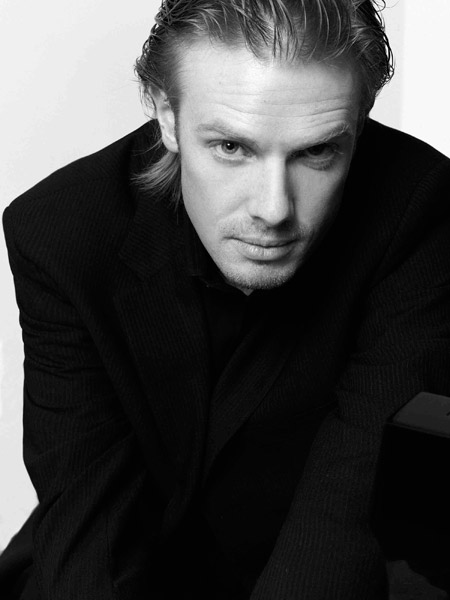
From A-to-Z: Andrey Zhilikhovsky Has It All

Something happened during the Met's HD  of Il Barbiere di Siviglia I didn't expect. As thrilled as I was with our Rosina and "Lindoro" both given stunning performancs by  Aigul Akhmetshina, and debutant, Jack Swanson it was Andrey Zhilikhovsky who completely captivated me with his wily barber, Figaro. Yes, it is a beautiful voice, but it wasn't that alone - it was the total inhabiting of a Figaro the likes of which I've rarely seen (and there have been some truly great ones in the past).


Zhilikhovsky brought a from the streets/pulled up by the bootstraps"  edgey quality to Figaro that I've neither seen, nor frankly even thought of before. It added something that made Figaro even more likeable - if that's possible. Zhilikhovsky's Figaro was a savvy opportunist, tuned in to absolutely everything and everyone around him. I loved watching him his rubbery mask of a face (and a handsome face at that) as within the literal blink of an eye, he'd switch gears from near disbelief to joy, frustration, on-the-spot "fixes" or a self-admiration of his place as the central cog in a very big machine. It was one of those performances that linger on in memory long after the curtain drops. Much longer. 

The conducting, the cast, - everything about it made this about as sparkling and believable a Barbiere as I've seen in decades. Bravo a tutti! I was pleased to see so many glowing reports and reviews of the show and questions of "who is this guy?" I thought I'd share some info (perhaps redundantly to some) about our Man from Moldova. 

So, while basking in the glow of Barbiere, I kept thinking to myself that Zhilikhovsky looked and sounded mighty familiar, but couldn't quite place how, or where from. A little digging through my own files and . . . well, it's no bloody wonder: I've seen him in a number of streams, i.e.., London's Royal Opera La Boheme, where his Marcello was one of the two best things in the show (Ailyn Perez' Mimi being the other, with - for ME - superstar Juan Diego Florez, a bit bleaty and dry voiced as Rodolfo); and as the Grown Up Almaviva in Rome's sparkling Graham Vick  staging of La Nozze di Figaro.  There were also more than a few other things that he stood out in.  

Of those,, it was his Prince Andrei in Tcherniakov's electrifying staging of Prokofiev's War and Peace for the Bayerische Staatsoper a couple of years ago that had me raving about the man and his total commitment to the art. It is a little embarrassing to admit I'd forgotten about him since those performances, but . . . maybe it's the name (what's in a name?)  or something else  that blocked my memory. Who knows.  That said, I can, however, guarantee this: having just watched scenes from the Prokofiev, and along with his Figaro, I shan't be forgetting him again. That's a promise.

As any production of Prokofiev's masterpiece is in and of itself a major event, critics from around the globe descened on Munich and to a one uniformly praised the Bayerische production (even the NY Times wrote a rave review as part of a lengthy piece - of course  it was not by Herr Zach Woolfe surprise, surprise) all of them singling out Zhilikhovsky's Prince.

The highest praise . . . has to be reserved for the central singing performances of Moldovan Andrei Zhilikhovsky as Prince Andrei Bolkonsky, Ukrainian Olga Kulchynska as Natasha Rostova, and Armenian Arsen Soghomonyan as Count Pierre Besukhov, all never anything less than impressive.  (Opera Journal - London, March 2023)

The baton is raised, the flutes begin to sing of spring, a man stands up, takes off his scarf, his parka and also begins to sing of spring, and of his love for a girl. It is Prince Andrej Bolkonski, wonderfully sung and played by Andrei Zhilikovsky. He is in love with Natascha Rostowa, played by Olga Kulchynska,and together they are magnificent . . . Andrei is mortally wounded, Natascha witnesses his agony, and they are beautiful and tragic as they say goodbye in their final duet. (L'Ape Musicale - Italy, March 2023)

The baritone's life story reads like a novel of conquering self through tough times, and a spiritedness of never giving in.  Growing up in poverty, and having to hitchhike to and from his lessons for hours each week, Zhilikhovsky studied music early on, continuing to study in college with a concentration not in singing but rather but choral conducting. Whilst in college in Moldova the voice appeared and people took notice. Completing his conducting studies, he was quickly offered an opportunity to study in Russia at the Rimsky-Korsakov Conservatory in St. Petersburg and things exploded from there with a five year engagement at the Bolshoi and then all over the globe throughout Europe, the U.K., the U.S. . . . everywhere.

I get made fun of (and don't mind one bit) that I'm always plastering the internet with photos of operas and singers, but it is my way - along with hearing these singers - to remember the works and artists I fell in love with. I don't always have time to look for and dig up a recording - but an instant 2 second glance at a photo can - for me - conjure up the memory of an entire performance and why it was special. So, to that end I offer in this post a gallery of  Zhilikhovsky in a variety of roles both alone, with other singers and directors, in case anyone else wants to see 'em.  You know you do. 

I will be actively on the lookout now for lots more from Our Man From Moldova.

(Click on images to enlarge)


Labels: , , , , , , ,

Wednesday, January 26, 2011

Portland Symphony: From Russia With Love


Last evening, the Portland Symphony Orchestra's evening began on a high note - and built up from there.

The concert started off with the world premiere of Maine composer Elliott Schwartz's "Diamond Jubilee" commissioned by the PSO in honor of Schwartz's 75th birthday. In three movements, Schwartz recalls 75 years of life on planet earth, displaying humor, pathos, beauty and even a bit of banality (working a ringing phone into the mix!) throughout. As each movement began a video screen presented names, events, products of food and technology, later replaced by images of those same people, places and things. Scored for an enormous orchestra, including five very busy percussionists, offstage chorus and electronics, the work packed a dramatic and satisfying wallop and I look forward to hearing it again. Afterwards, a brief onstage ceremony honored Schwartz with a proclamation from the Maine State Legislature, for all his contributions to the musical life of this great State.

Next up was the Prokofiev Piano Concert No. 3 in C Major. Bold and often daring, Prokofiev's much loved concerto allows its soloist - or demands its soloist - to display an athletic showmanship with sections recalling the complex, rapid passagework in the keyboard works of Bach and Scarlatti. Portland was blessed by having one of today's most exciting pianists, Andrew von Oeyen, on hand to do justice to this most exciting of concerti. von Oeyen played with a unique combination of strength and clarity - delicacy even - revealing at all times a formidable technique that left many (myself included) in awe. Interestingly, there is not a lot of visual showmanship from this young pianist, no bouncing off the bench, flailing arms or other dramatics often associated with virtuoso players, and even more interestingly, none was necessary: von Oeyen trusts and respects the music (and a faultless technique) to create its own excitement and the payoff is enormous. Choosing a brisker tempo than some performances I've heard, Maestro Moody struck both a balance and synchronization between soloist and orchestra that was nearly perfect from the very beginning as the strings begin their moto perpetuoto chugging making von Oeyen's entrance into this happy fray a breathless delight.

Slower passages, including the theme and variations of the concerto's dreamlike central movement, came off marvelously with genuine lyricism allowing Prokofiev's strange and beautiful harmonies to envelop the hall like some aural mist. The handling of the final Allegro-ma non troppo movement - allowed Prokofiev's "argument" to make great sense and the beautiful "violence" to break out as soloist and orchestra seem to perpetually be taking the lead from each other. The final moments of this concerto are as exciting as anything in the concerto repertoire and nothing was skimped over here, the Portland players sawing away energeticaly, von Oeyen dazzling all with the compoer's famous (and eagerly anticipated) glissandi and double handed chromatic passages that end the piece. The reaction from the house was immediate, roars of "bravo!" demanding Mr. von Oeyen return for several curtain calls.

A second great work, Shostakovich's cathartic Symphony No. 5, filled the second half of this Russian-themed program. Again, the Portland Symphony players displayed amazing control and Moody's sense of the piece was almost programmatic in the way the movements held together. The opening movement properly set a tone of melancholy gravitas Shostakovich demands here, the fugue for strings achingly, beautifully sad. No performance is perfect as evidenced by several moments which were slightly marred by the horns who, in all fairness have their work cut out for them by the composer. These were brief and while unfortunate, altogether forgiveable, particularly in light of everything else that was going splendidly onstage.

Once the final movement - with its blustery thunder - began, there was no turning back, even though Moody's tempo was considerably slower than it's often played, (recalling Rostropovich's epic way with this piece), This was a good thing and allowed the orchestra to strike an ideal, almost unnerving blend of romantic sweep with a military-like brutality, without letting the movement's ever forward momentum to flag all the way to the almost numbing (in a good way!) conclusion. The repeated high A's from the strings had that quality Rostropovich called "like a fork pressing into the brain." As earlier in the evening, the house roared its approval. Not even the 8 degree chill in the air could halt the elated mood as the smiling crowd filed out into the night.

Labels: , , , , , , ,