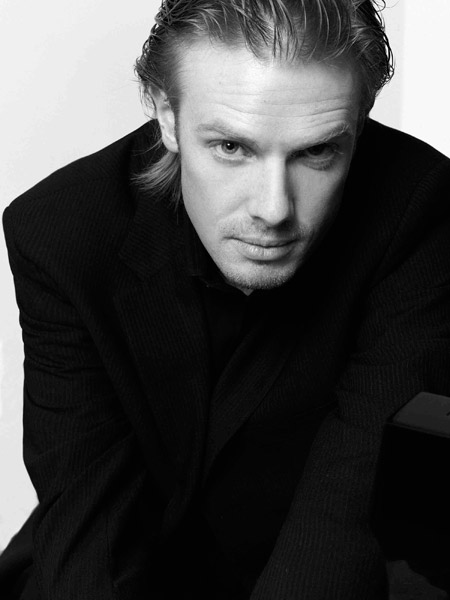
Thursday, September 26, 2024


HAPPY BIRTHDAY, DMITRI!
It's been a pretty awful day overall, but the last few hours have been repaired, rejuvenated in the rejoicing in the celebration of one the composers whose work has influenced, changed, and bettered my existence into something far more than merely that.
Dmitri Dmitriyevich Shostakovich lived a good bit longer than Mozart, but it was by no means a long life. Living to only 68 (as I approach those years myself, it seems frightfully young) and enduring Soviet era horrors, defamation, hardship, censorship and having his creativity stifled, what emerged as his catalog is nothing but triumph - even when we see it and hear it at its most intimate and harrowing moments, of which there is no shortage of.
Upon Stalin's death one can hear something of a shift in his style, as Clemency Burton-Hill wrote: 
. . . you can almost feel in his music, the gigantic breath of relief as he could start to publish not just the 'desk drawer' works he’d kept under wraps for years, including the Fourth Symphony, but also works in which he could openly give musical expression to the brutalities he and his contemporaries had endured under Stalin’s purges.
Shostakovich himself wrote:
Without party guidance I would have displayed more brilliance, used more sarcasm, I could have revealed my ideas openly instead of having to resort to camouflage.
Even so, what he was able to do with that camouflage revealed genius on a level we rarely see. The brain of this man . . . the heart of this man . . . the courage of this man was remarkable. Even more so when one learns he suffered from an almost crippling shyness, was a bundle of nerves, cautious to a fault and it's no bloody wonder considering all he endured. Watching family and his closest friends rounded up, sent off to the gulag or executed. Shostakovich himself barely escaped this fate and only because the officer assigned to interrogate him was arrested and Dmitri somehow slipped through.
Shostakovich had all kinds of ticks - obsessed with neatness and order, cleanliness,his daughter wrote of his synchronizing every clock, writing letters to himself to test the reliability of the postal service, and such.
Given his brief time on the planet, Shostakovich was able to crank out an astonishing amount of music . . . BIG music. 15 symphonies, six concerti, ballets, operas, a musical, endless chamber and solo music, film scores, theatre music, song cycles - his output is dizzying, and brilliant. He was known to sit at his table and write out a complete score without stopping, which seems . . . well, frankly impossible. For normal humans, it is. But, if you're a genius and gifted with a photographic memory . . . if you've worked every detail out in your head, maybe not. Shostakovich described his compositional method as "think long,, write fast."
I always found it fascinating that Shostakovich was such a football fan, and was shocked when I first learned his ballet, The Golden Age was . . . a ballet about football. That tidbit of information was, to this then young musician, about as cool as cool gets.
As a young pianist and already obsessive collector, I grew up with an oddball collection of favorite composers at my side whose music has been part of the soundtrack of my life - at the top of that list are two names: Bach. And Shostakovich.
Tonight I've enjoyed, laughed, cried, and gotten the shivers from a few personal favorites : Nadja Salerno Sonnenberg and Dmitri's boy Maxim, in the First Violin Concerto; a slew of Preludes and Fugues, Symphony No. 4 (Alain Altinoglu and the Frankfurt Radio Symphony) 10 and 11 (Mstislav Rostropovich and the National Symphony).
The night has just ended with a live (recorded earlier today) Birthday Concert from Moscow with the Tatarstan Symphony Orchestra led by Alexander Sladkovsky performing the Second Cello Concerto with Cellist, Alexander Knyazev (and who played an encore from the 3rd Bach Cello Suite, which seemed fitting), and Symphony No. 8. The Tartarstan is not one of the world's great orchestras, but nobody seems to have told them, and so they play as if they are. There were a few moments that could have been better, but overall the playing was inspired, solid, and offered a beautifully hushed ending more famous ensembles might want to look at and listen to.
I couldn't help but smile REALLY BIG when after an extended ovation, Maestro Sladkovsky turned his back to the house, raised his baton, and launched his musicians into the most appropriate of encores: Waltz No. 2 from the The Suite for Variety Orchestra No. 1, Perfect.

[Poscript:  This is the original photo collage I used for this birthday tribute.  To my utter horror . . . the upper right hand photo is something I did not catch. It IS Dmitri's head, but superimposed onto the body of Harry Potter (a series of films I've never watched, but whose hero apparently looked very similar to Shostakovich). Here is the photo collage I was going to replace it with - but now just adding because - how cool is it that pop culture is trying to steal Dmitri Shostakovich for its own purposes?]

Labels: , , , ,

Saturday, January 27, 2024

And the Lady Makes It Complete. Boston’s Magnificent Lady Macbeth Of Mtsensk.


Andris Nelsons ambitious Shostakovich Cycle with the Boston Symphony Orchestra reached its climax Thursday night with one of the composer’s earliest major works, an eagerly anticipated Lady Macbeth of Mtsensk, which may be considered the crown jewel of the project. The seemingly endless ovation at night’s end was like a collective explosion of joy.  

The fact Shostakovich began composing this masterpiece of mayhem before his 24th birthday – completing it at age 26, is significant. Already behind him were three symphonies, four film scores, a slew of chamber music, orchestral suites, a piano concerto, incidental music for a half dozen plays (including Shakespeare’s Hamlet), and two other operas, leaving no doubt this was one of the most significant, prolific and gifted composers the 20th century would see.  

Lady’s score is as sui generis as it gets, calling for an orchestra of immense size; full strings, winds, alto flute, extra brass – including four tubas (forced into a side aisle owing to limitations of the stage) and an enormous battery of percussion including celeste and a whip. Shostakovich uses them – and the chorus – like an assault on the senses, reaching a fever pitch loudness, creating a cacophony of sensational beautiful noise that is, quite simply, overwhelming. The genius is that, with those same forces, the composer gives us moments of such transparent delicacy, such beauty they cause the heart to ache with their tenderness, their ineffable sadness.  

Driving in from Portland, we arrived early at Symphony Hall and already there was a sense of occasion – a crackle in the air, if you will.  Eventually musicians began entering the stage, warming up, tuning, bits and blurts of the score repeated loudly, softly, filling the house along with increasing conversation as the audience steamed in taking their seats. That buzz. Nothing like it.

Maestro Nelsons, then Christine Opolais – looking all the world more movie star than singer, in a stunning gown of white, entered the stage to hearty applause and then we were on. (For the second half, Opolais appeared in an equally stunning gown, black, that would not have been out of place for Anna Bolena).  The opera begins, with a melancholic aria for Katerina, a childless young woman, trapped in an abusive marriage living on her in-law’s farm. Opolais conveyed this beautifully and one was immediately, as we need to be, in her corner.  Her overall performance was magnificent, even if the voice at times failed to register – or indeed, in large orchestral moments, even be heard. It was not uncommon during these moments to see her mouth wide open – screaming – but little or indeed, no sound at all. Fortunately, such moments are few and even then, the characterization of the bored, unloved beauty Katerina came through with (almost) full force. 

Tenor Brenden Gunnell was terrific as Sergei, the sturdy new laborer who seduces Katerina and sends the story into a tailspin, relishing the bawdiness of the terrific libretto – jointly written by Alexander Preys and Shostakovich himself. The consummation scene – even with the lovers on opposite sides of the podium – was what I’d call sinsational. His feckless betrayal of Katerina on the road to hell, I mean Siberia, came as natural as his declarations of love. (In my fantasies, it is always HE I want to see Katerina throw into the icy waters.)

As father-in-law Boris, Günther Groissböck was, as ever, at the top of his game. His experience in the role going back a few years proved to be the kind of asset one longs for in an opera like this (an opera like this?); still handsome, youthful, but with that rich, venerous sound that crosses over into lechery, he was . . . brilliant. Commanding. Sleazy and needed killing.  The mushroom/murder scene played out showing Shostakovich’s strength combining  humor with horror, and Groissböck and Opolais made a meal out of it. (I couldn’t resist.)

Peter Hoare’s Zinovy also proved to be another bit of excellent casting. The relatively small role is nonetheless the obvious lynchpin. Hoare’s sound carried perfectly while creating a genuine milquetoast character under his oppressive father’s cruel thumb. I almost felt bad for the guy when he met his end. Almost. 

The rest of the enormous cast larger roles and small ones – were all committed to putting their characters across in the strongest fashion, their quick entrances and exits enhancing the frenzy of the tale. Standouts included Alexander Kravets’ Shabby Peasant (Shostakovich’s nod to Boris Godunov), who held the distinction of being the only rumpled, dirty character of the evening, stumbling drunkenly, face contorted perfectly, and nicely exposed gut.  Marvelous really.  

Goran Jurić was excellent as The Priest, repeating the role of his Met debut several years ago. Dmitri Belosselskiy stepped in as the last-minute replacement for Paata Burchuladze’s Old Convict. My disappointment at not hearing the great Georgian basso was instantly relieved to hear the depth of pathos and beautiful sound Belosselskiy brought to the opera’s final scene.


As Anatoli Sivko’s Chief of Police entered for his first scene. His corrupt, exploitive character was immediately on display as Sivko, in tight pants, patent leather shoes, earrings and buttons all sparkling into the house, one could not resist a smile.  The handsome devil had the air of a model, dancer . . . or hustler. His sound – deep and rich projected the sleazy confidence to perfection. Patrick Guetti was imposing in every way as the Sentry, the voice, easily the biggest of the evening, sounded as though he had a microphone built into this larynx. I look forward to hearing much more from all of these.


The real star of the evening is, of course, Shostakovich himself, so, by default, Andris Nelsons who had every detail of the score well in hand.  Dmitri’s sprawling score seemingly covers everything, from folk music, jazz and showtunes to Mahler-esque Ländler-like dances, the chaotically comical Keystone Kop music and the Wozzeck-like Passacaglia, and through it all, the Bostonians made it come alive with vivid clarity and dramatic punch. Equal to that task was the singing of the Tanglewood Festival Chorus who delivered the right mood every time in splendor from the merry toast making of the wedding to the devastating final chorus. 

As the final chord faded, the house burst into an ovation finding most immediately on their feet, roaring as one in a collective explosion of joy. That ovation was one of the longest I can recall anywhere, the cast and conductor returning several times to the deafening applause and cheers. Though diminished, it was steady and loud enough that Günther Groissböck, clearly moved and buoyed by the enthusiasm, led the cast out for one last round of love from the house. 

Seeing mics throughout the house, a mixing board behind the first section of orchestra seats, confirmed hope these performances are being recorded by Deutsche Grammophon for release alongside the rest of the Shostakovich Project. Happy news indeed. 

There is another performance at 7 p.m. tonight being broadcast live on WCRB, and then a performance at Carnegie Hall next Tuesday, the 30th.  It should not be missed.

Labels: , , , , , , , , , ,

Sunday, August 13, 2023

The Death of Stalin: As Black As Comedy Gets


I've put off watching this for several years, but a hot, wet, muggy day seemed the perfect opportunity to stay indoors and watch Armando Iannucci's droll, madcap, violent and uncomfortably hilarious farce.  As he showed us in his brilliant writing for the series Veep, Iannucci nothing is off limits when it comes to comedy, even if one or many may be offended.  The only people who should be offended by this (in my opinion) are communist Soviet sympathizers.  The entirety of the Soviet Union's leaders are deliciously skewered like Shashlik roasting on an enormous mangal. All of them, particularly the monstrous Stalin, deserve no less. 

Pedantic scholars may balk at some of the liberties taken with the history, but there is enough "there there" to make the film ring true enough, and it's fun to see most of the major players of the time portrayed as bloated, egotistical, brutally cutthroat apparatchiki out for their own interests following their leader's demise. 

The film begins with a variation on a story from Testimony, Solomon Volkov's controversial purporting to be Dmitri Shostakovich's dictated memoirs.  Radio Moscow is broadcasting a concert featuring renowned pianist Maria Yudina in Mozart's Piano Concerto No. 23.  Stalin is listening from his dacha and so moved he calls the concert hall's director, Andreyev - a hilarious turn by the brilliant Paddy Consadine - and demands a recording of the performance. Unfortunately, it was not recorded.  Panic ensues and Andreyev decides to restage the concert running into the auditorium, rushig to the stage banging a cymbal as the audience is leaving:

Andreyev:

(to the guards): Lock the doors! Lock the doors!

(to the audience): Don't worry, no-one is going to get killed. But I do need you to stay!

Technician:  Half the audience have gone. The acoustic will be very dry.

Andreyev:  Pull people in off the streets! Fat ones, so we won’t need so many!

Musician 1: I could call my wife. She’d dampen the acoustic.

Everyone agrees, except for Yudina who had suffered under Stalin. She agrees after being offered a ridiculous sum of money, and in an act of defiance, pens a note to the leader expressing her contempt, and slips it into the recording.  

This is just the first few minutes and what follows is worthy of a Marx Brothers movie - or perhaps more accurately, a Marx-ist Brothers movie.  

Iannucci holds nothing back and at times the gallows humor - which can get rather violent ad brutal - gets about as black as can be, so much so I, at times, found myself laughing hysterically while simultaneously cringing.

The cast is absolutely an inspired one starting with the aforementioned Paddy Consadine, along with Olga Kurylenko (Maria Yudina), Simon Russel Beale (Beria), Jeffrey Tambor (Malenkov), Steve Buscemi (Kruschev), Michael Palin (Malatov), Jason Isaacs (Field Marshall Zhukov) and scores more in a truly ensemble effort.

Not surprisingly, the film, which is a basically a British production has been declared by various Russian agencies, "an unfriendly act by the British intellectual class," . . . "a nasty sendup by outsiders who know nothing of our history" and a "revolting attempt to spark discontent."  The Death of Stalin was given a pre-release showing for, among other agencies, The Ministry of Culture, which withdrew the distributor's credentials and banned the release.  Two movie theatres, unaware of the ban, but still possessing copies of the film, showed it and then were successfully sued by the Russian government.  

What makes all of this even more delicious is only 30% of Russians approved of the Ministry of Culture's banning of the film, and in less than a year and a half The Death of Stalin was downloaded in Russia over 1.5 million times.   

One of the chief joys of this movie for me was it's incredible soundtrack. Acclaimed British composer Christopher Willis pays enormous homage to Dmitri Shostakovich that at times the music sounds so hauntingly familiar I found myself - a total Shostakovich groupie - wondering exactly what piece I was listening to, or if something from the master previously unknown had been unearthed. One critic called it "the greatest soundtrack Shostakovich never wrote." I'd agree.

Labels: , , , , , , , , , , , ,

Wednesday, March 16, 2016

PSO: Shostakovich, Weill and the Rach 3

The Portland Symphony continued its outstanding season Sunday afternoon with the major draw of Rachmaninoff’s Third Piano Concerto, featuring American pianist Andrew von Oeyen, and a pair of work, one familiar, one not so much, to open the concert.

Up first was Shostakovich’s Suite for Variety Orchestra, one of the 20th century giant’s lesser known works. Those familiar with only the brooding, dark, dramatic intensity of his symphonies, quartets and other large scale works were in for a surprise. Shostakovich created this suite by recycling music from some of his film scores and the result is one of charming elegance, possessing a certain déjà vu which could be mistaken as the soundtrack to, say, Downton Abbey. Frequently criticized for his boldness, excessive, elaborate orchestrations and a certain bluntness or brutality, in the Suite for Variety Orchestra, Shostakovich is often criticized for creating something, frothy and unsubstantial with a “variety” instruments including two pianos, accordion, saxophone and more. Despite such dismissals, performance of this too infrequently played work wins over audiences and certainly such was the case Sunday, when a sold out audience roared its approval while the last notes of the stirring finale were still hanging in the air.

Shostakovich’s was followed up by another suite, this time Kurt Weill’s, from his Three Penny Opera. Familiar tunes from the opera (more frequently performed as a musical theatre piece) were given lavish treatments to evoke the world of Weill and collaborator Bertolt Brecht’s most famous work, and, as in the concert’s opening work, the orchestra responded Maestro Robert Moody’s decisive interpretation with a spot-on, technically assured performance. Moody, with a bit of inspiration, added music from the opera’s finale not included in the suite. A bold move that served to end the suite with a far more satisfying sense of finish than one typically hears.

Following intermission came the Rachmaninoff, which is what sold out the house. The Rach 3 (as it’s often called by enthusiasts and fans) is often referred to as “The Mount Everest of Piano Concerti,” and Mr. von Oeyen certainly approached it that way. While many a pianist rips and blasts his or her way through the moments of virtuosic bombast, this leaves many of the concerto’s more subtle passages feeling like longueurs, something to merely “endure” while we wait for the “good stuff.” Von Oeyen is not that pianist. Instead, he attacked the subtle intricacies with a Mozartean delicacy and finesse, allowing their gracefulness to contrast beautifully with the explosions never too far behind. This made the concerto, even to those who know it well, feel more natural, spontaneous, and, as happens all too rarely, surprising, allowing those bolder sections to stand out even more.

Moody, and the orchestra provided a true partnership, responding beautifully to von Oeyen’s interpretation. There was a lush roundness to the strings, with the cello section, in particular offering an extraordinarily deep richness. The concerto ended with the predictable roar and an instant standing ovation (one of those truly worth getting up for) as Mr. von Oeyen returned for three or four curtain calls, before Maestro Moody pushed him out one last time, for an encore. What does one follow up the Rach 3 with? Pretty much anything you want. Von Oeyen choose the Meditation from Massenet’s Thaïs. His playing of it was gentle, dreamy and put his audience where he wanted them: in a swoon.

Labels: , , , , , , ,

Saturday, December 5, 2015

Patricia Racette Storms through Shostakovich's "Lady"


I knew I'd not be able to attend, but wondered why I hadn't heard much on U.S. soil of Patricia Racette's turn as Katerina in Stalin's favorite opera (joking!) Shostakovich's "Lady Macbeth of Mtsensk." All that changed with a simple google search and reviews and photographs were turning up everywhere calling her performance - and the production, overall, a triumph for English National Opera.

Not all of the reviews were raves - but most were - and there were tons . . . the production (and Ms. Racette) garnering the kind of excitement for an operatic event we all too rarely see or hear of here in the States.

"Patricia Racette charts Katerina’s transformation from bored, resentful chattel to emancipated woman with steely control, and unswerving musical authority;"
Andrew Clements - The Guardian

"...Patricia Racette looked remarkably close to Leskov’s original description of his girl from Kursk, small, dark-eyed and with “a high white forehead, and black, almost blue-black hair”. Her performance tended to be understated, and may not match everyone’s idea of Katerina. . . . yet Racette’s voice and presence grew as the horrors of the plot unfolded"
Fiona Maddox - The Guardian

Patricia Racette’s Katerina holds a glittering concentrate of fury in her dark eyes and her finely tempered voice. a central performance of immaculate control and engagement."
Anna Piccard "The Spectator"

"Patricia Racette, singing with sometimes raw intensity, played this repressed Katerina with impressive authority, her very stillness a window on the emotions locked within."
Richard Fairman - The Financial Times

"Patricia Racette makes us believe in her utterly as she veers between the desperation of being downtrodden in a loveless marriage to the triumph of controlling her own destiny back to the twin despairs of imprisonment and sexual betrayal, making Katerina’s extreme actions seem inevitable to us in the audience."
David Karlin - Bachtrack

"American soprano Patricia Racette ... brings authority and intensity to the title role . . . Thanks to Wigglesworth’s empowered conducting, a superb performance from ENO’s orchestra, and Racette’s consistent strength, the opera hits hard."
George Hall - The Stage

"Patricia Racette smoulders as Katerina, and John Daszak brings a fine heroic tenor to the repulsive lover Sergei . . . Mark Wigglesworth . . . brings a detailed and illuminating reading to the score. Not to be missed."
Clare Colvin - Express

"Heady stuff with great musical punch, led by Patricia Racette’s sympathetic and attractively strong Katerina, and the powerfully hedonistic Sergei of John Daszak. Her restrained movements at the start become more fluid and dramatic as she emerges from her cocoon, and his swagger and natural stage presence personify an opportunist who can’t resist her."
Mark Ronand - Theatre Review


Brava, Pat!

Labels: , , , , , , ,

Tuesday, February 18, 2014

Galina Is Katerina: The REAL Lady Macbeth of Mtsensk


I waited 30 years to see this and was not disappointed - only happy to have lived long enough to finally have this opportunity.

First off: Vishnevskaya. For those, like me, who'd only experienced this artist in concert or at the very end of her operatic career, to finally witness her in a complete role as tailor-made for her as this proves to be overwhelming. She opens the film with Katerina's boredom" aria in a voice entirely unrecognizable one that harkens back more to her jazz and nightclub singing roots than the world of opera. It as though she were channeling Billy Holiday while imitating Rosa Ponselle.

Visnhevskaya's face is unbelievable. Forget about expressions changing over the course of a film - her face becomes some great mask which frequently in less than the blink of an eye can transform her from appearing angelic, saintly, demonic, tortured, and instantly go from looking like a teenager to a run down, broken old woman. Likewise, she presents as stunning and beautiful one second and grotesquely haggard the next. To call watching her "fascinating," is an understatement.


Though she insisted she performed her own stunts in the film's tragic and violent ending (which here, are bone chillingly horrifying) they simply HAD to use a stunt double in one scene (though you can't really tell), when Katarina violently kicks out her bedroom window (which IS clearly Vishnevskaya) leaps out about 8 feet - (and almost 3 stories in the air!) dropping to a landing beneath her, then tears down the stairs like a madwoman possessed. I rewound it about 5 times to try and detect where the switch was made . . . but could not.

Mikhail Shapiro's film is gorgeously grotesque. 1966 Soviet cinema wasn't among the technically best the film world had to offer, and yet Shapiro's techniques, seems comprised of equal parts Hitchcockian hyper-realism and the surrealstic spookiness from the earliest days of film like Wiene's "Dr. Caligari." There is a visible pulsating quality in the transfer (in the original, too? I couldn't know) a sort of silent movie "flicker" in the washed out, oddly green/blue hued sepia toned color. Ingeniously, Shapiro sometimes layers image over image, such as the opening scene where we watch Katerina, sitting in a window looking out as the images she describes are projected, like home movies, against the exterior walls of her home. It is a brilliant device that early on pulls us directly into the mind of Katerina and how later, despite her brutal actions, retains our sympathy for her.

With the score so severely cut to fit within the framework of the film, we loose some truly great music, but the film version points up the very limits of ennui and violence of the tale into nearly unbearably vivid relief.

Those unfamiliar with Shostakovich's score - or scared of it - will here get some of the most tuneful and beautiful music from this opera and, as cast here, one practically revels (whenever possible) in its "Fiddler on the Roof" nightmare quality.

For the lovemaking music that begins the second act , Shostakovich draws on the romantic Russian tradition with music of ineffable sweetness, which in this context becomes as jarring and unsettling as everything that comes before or after it.

Unafraid to combine horror and hilarity, Shapiro adds yet another amazing sequence to the film when Katerina, first hears the ghost of her freshly murdered father-in-law. Onstage, this scene usually means Boris belting out his lines in white theatrical "ghost" make-up, etc. In the film, Shapiro preys on Katerina's nightmarish guilt as, truly ghostlike, he bursts through a set of doors, a nearly cartoon-like head 50 times larger than life hovering and singing over Katerina and Sergei's sleeping bodies. I found myself simultaneously laughing and cringing in horror. Yes, I loved it.

The final scenes of that endless march through Siberia is enough to chill one right to the marrow. As a big fan of Vishnevskaya, I've read her account innumerable times, but even that had not prepared me for those final, violent plunges as she takes Sonyetka down with her into that horrible, icy death. Vishnevskaya's Katerina has become absolutely unhinged, ratcheting the horror even even further in an image I won't divulge, but can honestly say one I did not see coming.

I am (for more than obvious reasons) delighted to be alive right now, but also to have lived live long enough to be able to indulge the senses with the visionary work of unknown masters of yore coming to light, like the nearly forgotten Mr. Shapiro.

Anyone on the fence about this one should just climb right over to the other side. This is truly amazing operatic filmmaking . . . vastly unlike anything one is likely to ever have seen before or since.

Labels: , , , , , , , , , ,

Wednesday, January 26, 2011

Portland Symphony: From Russia With Love


Last evening, the Portland Symphony Orchestra's evening began on a high note - and built up from there.

The concert started off with the world premiere of Maine composer Elliott Schwartz's "Diamond Jubilee" commissioned by the PSO in honor of Schwartz's 75th birthday. In three movements, Schwartz recalls 75 years of life on planet earth, displaying humor, pathos, beauty and even a bit of banality (working a ringing phone into the mix!) throughout. As each movement began a video screen presented names, events, products of food and technology, later replaced by images of those same people, places and things. Scored for an enormous orchestra, including five very busy percussionists, offstage chorus and electronics, the work packed a dramatic and satisfying wallop and I look forward to hearing it again. Afterwards, a brief onstage ceremony honored Schwartz with a proclamation from the Maine State Legislature, for all his contributions to the musical life of this great State.

Next up was the Prokofiev Piano Concert No. 3 in C Major. Bold and often daring, Prokofiev's much loved concerto allows its soloist - or demands its soloist - to display an athletic showmanship with sections recalling the complex, rapid passagework in the keyboard works of Bach and Scarlatti. Portland was blessed by having one of today's most exciting pianists, Andrew von Oeyen, on hand to do justice to this most exciting of concerti. von Oeyen played with a unique combination of strength and clarity - delicacy even - revealing at all times a formidable technique that left many (myself included) in awe. Interestingly, there is not a lot of visual showmanship from this young pianist, no bouncing off the bench, flailing arms or other dramatics often associated with virtuoso players, and even more interestingly, none was necessary: von Oeyen trusts and respects the music (and a faultless technique) to create its own excitement and the payoff is enormous. Choosing a brisker tempo than some performances I've heard, Maestro Moody struck both a balance and synchronization between soloist and orchestra that was nearly perfect from the very beginning as the strings begin their moto perpetuoto chugging making von Oeyen's entrance into this happy fray a breathless delight.

Slower passages, including the theme and variations of the concerto's dreamlike central movement, came off marvelously with genuine lyricism allowing Prokofiev's strange and beautiful harmonies to envelop the hall like some aural mist. The handling of the final Allegro-ma non troppo movement - allowed Prokofiev's "argument" to make great sense and the beautiful "violence" to break out as soloist and orchestra seem to perpetually be taking the lead from each other. The final moments of this concerto are as exciting as anything in the concerto repertoire and nothing was skimped over here, the Portland players sawing away energeticaly, von Oeyen dazzling all with the compoer's famous (and eagerly anticipated) glissandi and double handed chromatic passages that end the piece. The reaction from the house was immediate, roars of "bravo!" demanding Mr. von Oeyen return for several curtain calls.

A second great work, Shostakovich's cathartic Symphony No. 5, filled the second half of this Russian-themed program. Again, the Portland Symphony players displayed amazing control and Moody's sense of the piece was almost programmatic in the way the movements held together. The opening movement properly set a tone of melancholy gravitas Shostakovich demands here, the fugue for strings achingly, beautifully sad. No performance is perfect as evidenced by several moments which were slightly marred by the horns who, in all fairness have their work cut out for them by the composer. These were brief and while unfortunate, altogether forgiveable, particularly in light of everything else that was going splendidly onstage.

Once the final movement - with its blustery thunder - began, there was no turning back, even though Moody's tempo was considerably slower than it's often played, (recalling Rostropovich's epic way with this piece), This was a good thing and allowed the orchestra to strike an ideal, almost unnerving blend of romantic sweep with a military-like brutality, without letting the movement's ever forward momentum to flag all the way to the almost numbing (in a good way!) conclusion. The repeated high A's from the strings had that quality Rostropovich called "like a fork pressing into the brain." As earlier in the evening, the house roared its approval. Not even the 8 degree chill in the air could halt the elated mood as the smiling crowd filed out into the night.

Labels: , , , , , , ,

Saturday, March 6, 2010

Attila & The Nose@ The Met


In less than 24 hours The Met has had two of the season's most exciting broadcasts on Sirius and I, for one, am one deliriously happy man!

Last night I was glued to Shostakovich's "The Nose" - so much so I was two hours late to a party - I didn't care! I'm surprised that an eighty-plus year old work would still meet with "it's too modern" or it's "all wrong notes" type of comments - and that seemingly most or all of the few comments I've so far read have been so negative (though I shouldn't be surprised by that at all).

I found the entire affair - even just over the radio - to be absolutely mesmerizing; a a glorious romp of sound with contrasts of darkness and light that overlapped perpetually in a manner that grabbed on and never let go.

Friends who attended said it was a major event and a "must be seen" live experience. I would gladly have given up half of this years HD transmissions to have had "The Nose" and "From the House of the Dead" on the HD roster. Hopefully one of the companies sharing the production will have it telecast and become available on DVD. Even if it doesn't, I'll cherish and smile at the memories of this score so beautifully - and entertainingly played over the airwaves last night.

The follow up of the Attila of Verdi this afternoon makes it al - to me at least - all the more sensational. The already typically amazing Met band sounded - from the very opening notes of the prelude to the prologue - breathtaking - amazing. The richness of the string sound was particularly lovely.

I feared what might happen when Ms. Urmana was announced as suffering from and struggling through a cold. I was not prepared for the way she hurled her voice out in "Santo di Patria" - it wasn't necessarily "pretty" singing, but it thrilled me right to the core. Later in her Act I aria she nailed a perfectly executed trill and through in a pianissimi that Caballe would have been proud of!

Vargas sounded a bit frantic - but in a good, slightly unhinged way that is not typical of him. He seemed to be - like everyone else - caught up in the fervor and the fever of it all. Even the intermission features today seemed of a higher level, with nice interviews and blurbs from Messrs. Muti, Abdrazakov and Ramey (with some nice clips of Ramey's Met debut in Rinaldo).

I read what seems to be perpetual criticism of Mr. Gelb and The Met - but too little praise for the things that go right. Last night and today show him and
his company doing things very, very right. Two so very different, contrasting works of different eras masterfully performed. Bravi!

The sun is shining bright and the past two days my home has been filled with glorious sounds orchestral and vocal from The Met. What a wonderful world this can be when we let it!

Labels: , , , , , , , , , , , ,